

ISIS’s attacks against the Yazidi population have been legally characterised as genocide, crimes against humanity and war crimes by the United Nations Human Rights Council’s Independent International Commission of Inquiry on the Syrian Arab Republic (IICISAR). In its 2016 thematic paper “‘They came to destroy’: ISIS Crimes Against the Yazidis”, the Commission concluded that ISIS deliberately targeted the Yazidis as a religious group, killed men and boys, subjected women and girls to enslavement and sexual violence, transferred children and imposed conditions of life calculated to bring about the group’s physical destruction.¹ Under Article II of the 1948 Genocide Convention, these acts fulfil the definition of genocide, including the specific intent to destroy, in whole or in part, a protected group. The same report and subsequent Commission outputs further qualify ISIS’s conduct as crimes against humanity and war crimes, emphasising the widespread and systematic nature of the attack against the civilian Yazidi population.11
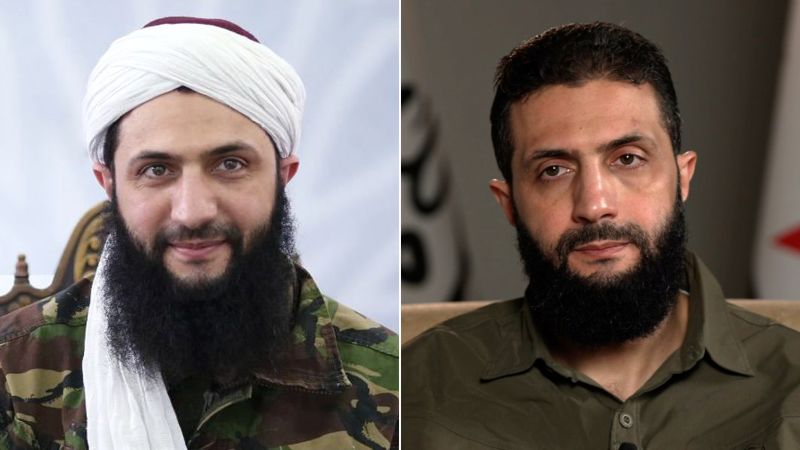
A decade later, a striking paradox emerges: Ahmed al-Sharaa, better known by his former nom de guerre Abu Mohammad al-Jolani, a long-time jihadist commander in Iraq and Syria, is received at the White House as Syria’s transitional president.⁴ This development raises a fundamental question for international law: how should states respond when an actor emerging from an atrocity-producing network is politically rehabilitated in the very territory where genocide has taken place?
ISIS Crimes and State Obligations
The legal consequences of the IICISAR’s findings are clear. States party to the Genocide Convention have a duty to prevent and punish genocide wherever it occurs. This duty is not limited to their own territory; it is triggered whenever there is a serious risk of genocide that they know or ought to know. It entails adopting appropriate domestic legislation, investigating and prosecuting suspects under their jurisdiction, and cooperating with international investigative bodies.
The Commission itself underlined in 2016 that, given the absence of an international criminal tribunal with jurisdiction over Syria and Iraq, “national prosecutions provide the only path for accountability for victims of crimes committed in Syria” and urged states to make full use of their domestic laws on genocide, crimes against humanity and war crimes.¹ Parallel obligations arise under the Geneva Conventions and customary international law regarding grave breaches: states must search for persons alleged to have committed such crimes and either prosecute them or extradite them to a competent jurisdiction.
These obligations also include a negative dimension. States must refrain from acts that may foreseeably contribute to impunity for genocide and other core international crimes. This encompasses shielding alleged perpetrators from investigation, obstructing evidence collection or granting political protection that effectively neutralises accountability efforts.
Domestic Prosecutions and UN Investigative Mechanisms
In recent years, domestic courts have become crucial venues for enforcing these obligations. In December 2024, the District Court of The Hague convicted Dutch national Hasan Aarab and sentenced him to ten years’ imprisonment for enslaving a Yazidi woman in Raqqa.² The court, as reported by JusticeInfo, qualified his conduct as a crime against humanity and explicitly linked it to ISIS’s broader attack on Yazidis.² The decision illustrates that national jurisdictions can and do treat ISIS abuses not merely as “terrorism”, but as core international crimes.
These prosecutions rely heavily on evidence gathered and preserved by UN bodies. Since 2011, IICISAR has documented human rights violations and international crimes committed in Syria by all parties, including ISIS, producing a substantial factual and legal record.¹⁷ In parallel, the International, Impartial and Independent Mechanism for Syria (IIIM), established by the UN General Assembly in 2016, has been mandated to collect, consolidate, preserve and analyse evidence of serious crimes in Syria and to prepare case files for use by national, regional or international courts.11
In the Iraqi context, UNITAD was tasked with investigating ISIS crimes, including those committed against Yazidis, and building evidentiary files for potential prosecutions worldwide. A 2024 JusticeInfo commentary on UNITAD’s premature closure warns that, unless states make active use of the evidence compiled, the opportunity to ensure accountability for ISIS atrocities may be lost. ³ Together, these mechanisms constitute an evidentiary backbone: they translate the abstract architecture of genocide and crimes against humanity into concrete, justiciable cases.
The Rise of Ahmed al-Sharaa
Ahmed al-Sharaa’s trajectory is rooted in the same transnational jihadist milieu in which ISIS operated. He emerged as a commander in the Iraqi and Syrian insurgencies and became the founding leader of Jabhat al-Nusra, Al-Qaeda’s affiliate in Syria, before heading Hayat Tahrir al-Sham (HTS).⁴ ⁵ An ISPI profile published in December 2024, “Leader to Watch 2025: Ahmed al-Sharaa, aka Abu Mohammad al-Jolani”, describes how he attempted to rebrand himself and HTS as a Syrian-centred actor, distancing the group from Al-Qaeda’s global agenda while retaining tight military and security control over large parts of north-western Syria.⁵
A subsequent ISPI commentary, “Syria, a (Former) Jihadist in Washington: What to Know about the Trump–Al-Sharaa Meeting”, examines his first official visit to the White House in November 2025 as Syria’s new president.⁴ The analysis notes that the meeting marked a turning point in U.S.–Syria relations and emphasises the realpolitik logic of treating “a former Al-Qaeda affiliate” as a strategic partner. According to the same source, the visit was made possible by the lifting of UN and U.S. sanctions previously imposed on al-Sharaa in connection with his earlier involvement in jihadist networks. ⁴
International law does not prohibit diplomatic contact or negotiation with de facto authorities. Nor does it equate diplomatic recognition with a legal acquittal. The key legal issue is not whether states may speak to al-Sharaa, but what they must do when serious allegations link him to atrocity crimes.
Yazidi Allegations and International Reports
In February 2025, the Kurdish newspaper Özgür Politika published an interview with Yazidi sociologist Azad Barış titled “Colani’nin elinde Êzidî kanı var” (“Colani has Yazidi blood on his hands”).⁶ Barış recalls that al-Sharaa’s involvement in anti-Yazidi violence predates the 2014 Sinjar campaign and asserts that his name appears in local records and testimonies in connection with the 14 August 2007 truck bombings in the Sinjar district, which targeted the Yazidi communities of Qahtaniyah and Jazira and killed hundreds of civilians.⁶ These attacks have been described in UN-linked and human-rights reporting as among the deadliest bombings against Iraqi civilians since 2003, and they specifically struck Yazidi villages.⁸
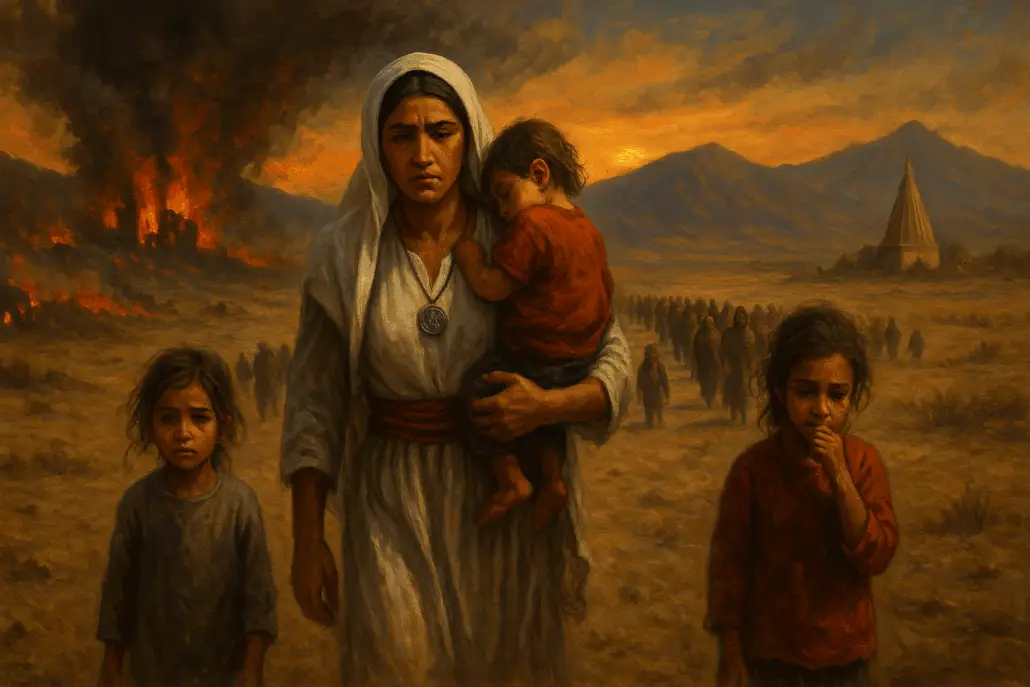
Barış further cites information from Aras Celal, the Syria representative of an international human-rights organisation, according to which approximately 800 Yazidi women and children abducted by ISIS remain unaccounted for and are believed to be held in detention facilities located in areas under HTS control in north-western Syria.⁶ If accurate, these claims would suggest that elements of the attack against the Yazidis—enslavement, unlawful imprisonment, possible sexual violence and enforced disappearance—are not merely historical, but ongoing in territories under al-Sharaa’s political and military influence.
HTS and Jabhat al-Nusra Abuses Documented in UN and International Reports
Although there are still no completed judicial proceedings regarding Ahmed al-Sharaa’s individual criminal liability, the armed groups he has led—Jabhat al-Nusra and later Hayat Tahrir al-Sham (HTS)—have committed serious violations in Syria, particularly in and around Idlib, which are extensively documented in UN Commission reports and major international human rights organisations’ publications. For this reason, it is not only el-Sharaa’s “former jihadist” identity but also the actual record of violence carried out by the organisation under his command that must be taken into account from a legal perspective.
UN’s Independent International Commission of Inquiry on the Syrian Arab Republic (IICISAR) reports published after 2019 detail widespread practices of arbitrary detention, ill-treatment, torture, enforced disappearances and looting by armed groups operating in north-western Syria—especially in Idlib. In its 2024 report, the Commission emphasised that groups and factions operating under the rubric of “security” were using violence, detention, and threats not to protect civilians but to extort, coerce, and impose forced obedience, identifying HTS and affiliated units as integral components of this “predatory security architecture.” ⁷ 12
This framework is corroborated by detailed field reports from human rights organisations. Human Rights Watch’s 2019 report “Syria: Arrests, Torture by Armed Group” documents how an armed group affiliated with al-Qaeda—explicitly identified as HTS—arbitrarily detained dozens of individuals in areas under its control in Idlib, Hama, and rural Aleppo; held civilians for weeks or months without contact or legal representation; and subjected some detainees to severe torture to extract “confessions.” The torture methods cited in the report include beatings, electric shocks, and prolonged suspension. 9
Human Rights Watch’s World Report 2022 section on Syria provides an updated account of HTS practices, noting that the group carries out raids, arbitrary arrests, and intimidation campaigns against activists, journalists, humanitarian workers, and ordinary civilians who express critical views. According to the report, HTS systematically weaponises detention and enforced disappearance to suppress dissent, framing criticism as a threat to “security” or as “fitna.”10
A similar pattern appears in the U.S. Department of State’s 2022 and 2024 human rights reports. These reports state that HTS engages in unlawful killings, kidnappings, torture, arbitrary and prolonged detention, extrajudicial executions, and seizure of civilian property in north-western Syria. ¹ ⁶ ⁸
The European Union Agency for Asylum’s 2025 Syria Country Report notes that in certain operations targeting Alawite villages, HTS forces have been accused of killing unarmed civilians during raids, detaining individuals without notification, and carrying out intimidation and in some cases execution-like acts through elite units such as the “Red Bands.” 13
The Commission’s 2020 child-rights report “They have erased the dreams of my children” documents the devastating impact of armed groups—including HTS—on children in north-west Syria. The report highlights child recruitment, detention under “security” pretexts, severe restrictions on education due to conflict dynamics, and the incorporation of children into the war economy and cycles of violence.11
Taken together, this body of evidence demonstrates that the organisation led for years by el-Sharaa established a security regime that systematically violated international human rights law and international humanitarian law. Arbitrary detention, torture, enforced disappearance, suppression of freedom of expression, targeted violence against civilians, and raids on minority settlements appear consistently in both UN Commission documentation and the reports of independent human rights organisations as distinctive practices of HTS.9 10 7 8 13
Therefore, the issue is not merely Colani’s “former jihadist identity.” Reports from the field indicating that, following the establishment of the transitional government, attacks and mass killings have taken place in Alawite and Druze settlements, particularly in southern Syria and rural areas,¹⁴ have further deepened concerns that the security apparatus under al-Sharaa’s leadership possesses not only a historical record of violence but also, through the security architecture he has established in office, an ongoing capacity to generate a new wave of risk and violence for minority communities.
This situation demonstrates that, from the perspective of international law, the fact that the current president of Syria has for years exercised direct political and military leadership over a security apparatus associated with serious and well-documented violations can no longer be overlooked. Accordingly, for states, the conduct of a comprehensive, independent, and impartial investigation into both individual criminal responsibility and command responsibility is not a matter of discretion but a clear obligation that must be fulfilled.
Legal Implications of Political Rehabilitation
International criminal law rejects the notion that official capacity exempts individuals from responsibility for genocide, crimes against humanity or war crimes. Article 27 of the Rome Statute states that a person’s position as Head of State or government “shall in no case exempt” them from criminal responsibility. While the International Criminal Court does not have automatic jurisdiction over Syria or Iraq, this principle reflects a broader understanding that political office cannot erase legal accountability.
For states engaging with al-Sharaa, three sets of obligations are particularly relevant. First, the duty to prevent genocide requires them to take reasonable measures when they are aware of a serious risk that genocide or related crimes may continue or recur. Hosting a leader whom Yazidi survivors publicly accuse of involvement in earlier mass violence, and whose forces allegedly continue to hold Yazidi captives, without supporting independent investigation, sits uneasily with this preventive duty. Second, the obligation to prosecute or extradite suspects of core international crimes implies that states must not create de facto safe havens for individuals who may be implicated in such crimes. Political rehabilitation that has the effect of shielding an individual from scrutiny, rather than facilitating it, may undermine this obligation. Third, the general prohibition on aiding or assisting serious breaches of peremptory norms of international law means that states must avoid actions that could reasonably be seen as legitimising or entrenching an unlawful situation, including ongoing crimes against humanity.
None of these rules forbid states from negotiating with de facto power-holders. What they do require is that political engagement be accompanied by, and not substituted for, legal scrutiny. When states lift sanctions, extend diplomatic honours and frame a former jihadist commander primarily as a partner in “stabilising” Syria and “managing the ISIS file”, while allegations by Yazidi survivors remain unexamined, they risk sending a message that international criminal law applies rigorously to some perpetrators and selectively to others.
The legal framework governing ISIS crimes is robust. The Yazidi genocide has been documented in detail by UN bodies; domestic courts have begun to translate this record into concrete convictions; and investigative mechanisms such as IICISAR, IIIM and UNITAD have generated a substantial evidentiary archive. Whether this architecture will retain its integrity now depends on its consistent application.
The case of Ahmed al-Sharaa illustrates the fault-line between law and realpolitik. Political rehabilitation of a leader who emerges from the jihadist landscape, and who is named in Yazidi testimony as bearing “Yazidi blood on his hands”, cannot be treated as a purely diplomatic manoeuvre. It directly intersects with existing obligations to prevent and punish genocide and to ensure accountability for crimes against humanity. International law does not demand that states refuse all contact with such figures. It does, however, require that survivors’ rights to truth and justice are not subordinated to short-term strategic considerations.
If the international community is serious about the promise of “never again”, it must ensure that legal scrutiny is not suspended precisely at the point where it becomes politically inconvenient. In the context of the Yazidi genocide and ISIS atrocities, political rehabilitation cannot precede accountability. International law requires nothing less.
Rüştü DEMIRKAYA
Board member of the Mesopotamia Observatory of Justice (Mojust)
REFERENCES
1. UN Human Rights Council, Independent International Commission of Inquiry on the Syrian Arab Republic (IICISAR). “‘They came to destroy’: ISIS Crimes Against the Yazidis.” A/HRC/32/CRP.2 (2016).
2. JusticeInfo / AFP. “Netherlands: 10 years in prison for enslaving a Yazidi woman.” 11 December 2024.
3. JusticeInfo. “The blame game over UNITAD’s premature closure will not do anyone any good.” (B. Gavrilovic), 2024.
4. Francesco Petronella, ISPI. “Syria, a (Former) Jihadist in Washington: What to Know about the Trump–Al-Sharaa Meeting.” 11 November 2025.
5. Suhail al-Ghazi, ISPI. “Leader to Watch 2025: Ahmed al-Sharaa, aka Abu Mohammad al-Jolani.” 27 December 2024.
6. Özgür Politika. “Colani’nin elinde Êzidî kanı var.” 6 February 2025.
7. UN Human Rights Council, IICISAR Documentation on Syria (2019–2024), including reports on armed groups and security structures in NW Syria.
8. U.S. Department of State. “Country Reports on Human Rights Practices: Syria.” (2022, 2024).
9. Human Rights Watch. “Syria: Arrests, Torture by Armed Group.” 2019.
10. Human Rights Watch. World Report 2022: Syria Section.
11. UN Human Rights Council. “‘They have erased the dreams of my children’: Violations of Children’s Rights in Syria.” 2020.
12. UN Human Rights Council, IICISAR findings on coercive security structures in NW Syria (2024).
13. European Union Agency for Asylum (EUAA). Syria Country of Origin Report, 2025.
14. Human Rights Council, Independent International Commission of Inquiry on the Syrian Arab Republic. (2025, August 14).