


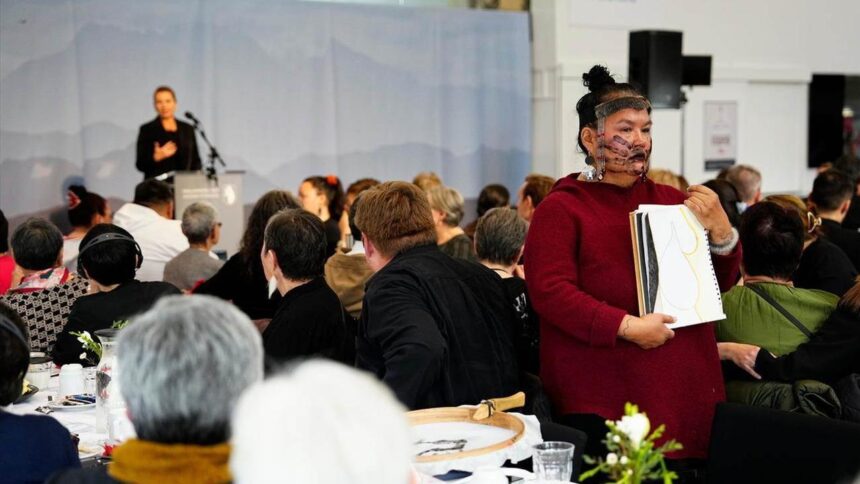
The government of Denmark has issued a formal apology to Greenlandic women who were subjected to coercive birth control practices during the second half of the twentieth century. For decades, thousands of Inuit women and girls were fitted with intrauterine devices without their informed consent as part of a state-led population control policy implemented in Greenland.
The apology, delivered jointly with Greenlandic authorities, acknowledges the serious harm caused by these practices and represents one of the most explicit recognitions to date of Denmark’s colonial responsibility toward Greenland’s Indigenous population.
A State Policy Targeting Indigenous Reproduction
From the early 1960s through the 1990s, Danish health authorities implemented a programme aimed at limiting birth rates in Greenland. As part of this policy, intrauterine devices were systematically inserted into girls and women, often without adequate information, consent, or medical justification.
Historical records and survivor testimonies reveal that many of those affected were minors. Some girls were as young as twelve years old when the devices were fitted, frequently during routine medical examinations or school health visits. In numerous cases, neither the girls nor their families were informed about the procedure or its long-term implications.
The policy was framed by Danish authorities as a public health and modernisation measure. However, for the women affected, it resulted in lasting physical complications, reproductive harm, and profound psychological trauma.
Silence, Denial, and the Emergence of Testimonies
For decades, these practices remained largely absent from official accounts of Denmark–Greenland relations. The women affected were rarely informed of what had been done to them, and many only discovered years later that medical devices had been implanted without their consent.
Public awareness began to shift in the late 2010s, when survivors came forward with their stories and investigative journalists uncovered archival evidence pointing to the systematic nature of the policy. These revelations sparked widespread debate in Greenland and Denmark, raising questions about colonial governance, medical ethics, and state responsibility.
Under growing pressure from Greenlandic institutions and civil society organisations, Danish authorities agreed to launch an independent historical investigation into the scope and intent of the programme.
Findings of Systematic Abuse
The investigation confirmed that the birth control measures were not isolated incidents but part of a coordinated state policy. Estimates indicate that between 4,000 and 5,000 women and girls were affected between 1966 and 1970 alone, representing a significant proportion of Greenland’s female population of reproductive age at the time.
The report concluded that informed consent was routinely absent and that the policy disproportionately targeted Inuit women. It situates the programme within a broader colonial framework in which Denmark exercised extensive control over Greenland’s social, demographic, and institutional structures.
Official Apology and Political Acknowledgment
In response to the findings, Danish Prime Minister Mette Frederiksen publicly apologised to the victims on behalf of the Danish state. She acknowledged that the policy constituted a grave violation of individual rights and expressed regret for the suffering caused.
Greenlandic leaders welcomed the apology as an important symbolic step, emphasising that it represents long-overdue recognition of the harm inflicted on Indigenous women under colonial administration.
At the same time, Greenlandic officials stressed that recognition alone is insufficient. They underlined the need for concrete measures to address the consequences of the policy and to ensure that similar abuses cannot recur.
Reparations and Ongoing Demands for Justice
Alongside the apology, the Danish government announced plans to establish a reconciliation and compensation mechanism for survivors. Details regarding eligibility, financial reparations, and long-term support remain under discussion.
Many survivors and advocacy groups have welcomed the acknowledgment but continue to call for clearer commitments, including individual compensation, access to medical and psychological care, and formal guarantees of non-repetition.
The case has also reignited broader debates about Denmark’s colonial legacy in Greenland, including issues of governance, autonomy, and historical accountability.
A Broader Reckoning with Colonial Violence
The forced contraception programme is increasingly understood not as a historical anomaly but as part of a wider pattern of colonial control over Indigenous bodies and lives. For many Greenlandic women, the apology marks a moment of recognition after decades of silence, but also highlights the limits of symbolic gestures in addressing structural injustice.
As Denmark and Greenland continue to renegotiate their relationship, the experiences of these women stand as a reminder that colonial governance operated not only through political institutions, but through intimate and bodily forms of control whose consequences are still felt today.
Source: This article is based on reporting originally published by JusticeInfo:
Photo: rts.ch