

In her new report Torture and genocide, submitted to the UN Human Rights Council, Special Rapporteur Francesca Albanese argues that since 7 October 2023 torture against Palestinians has not been limited to detention sites or interrogation rooms. According to the report, custodial abuse, forced displacement, siege, starvation, destruction of civilian infrastructure and the systematic dismantling of the conditions of life form part of a broader regime of collective suffering that meets the threshold of genocide under international law. The report was issued in an advance edited version on 23 March 2026 and is based on more than 300 testimonies, consultations with legal experts and survivors, and a review of primary and public sources.
Torture is framed as structural, not exceptional
The report’s central argument is that torture is not treated as a series of isolated abuses but as a structural feature of what Albanese describes as ongoing genocide and broader settler-colonial apartheid. It explicitly situates torture within both custodial and non-custodial practices directed against Palestinians as a group.
The detention regime is described as a system of humiliation, degradation and terror
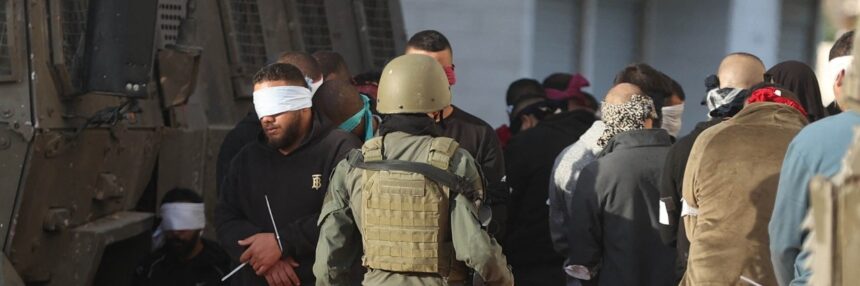
The report states that since October 2023 more than 18,500 Palestinians, including at least 1,500 children, have been arrested, and that as of February 2026 Israel was still holding 9,245 Palestinians in detention facilities. It details practices including starvation, sleep deprivation, sexual violence, denial of medical care, enforced disappearance and severe physical abuse, presenting them as deliberate instruments of domination rather than excesses.
Gaza is presented as a territory turned into a torturous environment
The report argues that Gaza has been transformed into what it calls a vast torture camp, where nowhere is safe and where collective suffering is produced through bombardment, mass displacement, destruction of homes, collapse of health care, starvation and permanent exposure to fear. It links these conditions to the deliberate destruction of the material and social foundations of Palestinian life.
The destruction of health, shelter and everyday life is treated as part of the same logic
Among the report’s strongest claims is that torture cannot be confined to prisons. It includes the destruction of hospitals, the denial of medical treatment, the obliteration of homes, and the deprivation of food, water and safety within a wider framework of collective punishment and long term physical and psychological harm.
The West Bank is addressed as part of the same continuum of violence
The report also emphasizes that the West Bank, including East Jerusalem, is subject to an intensified continuum of surveillance, military violence, settler attacks, infrastructure destruction and forced displacement. It describes this as a regime of collective terror aimed at breaking social life and undermining Palestinian presence on the land.
The conclusion is explicit: the report does not treat these acts as isolated crimes
In its final section, the report concludes that systematic torture has become an integral component of what it describes as settler-colonial genocide. It argues that the cumulative effect of detention abuse, starvation, displacement, mass killing and the destruction of the conditions of life reveals a coherent architecture of destruction rather than disconnected violations.
Photo: ohchr.org