


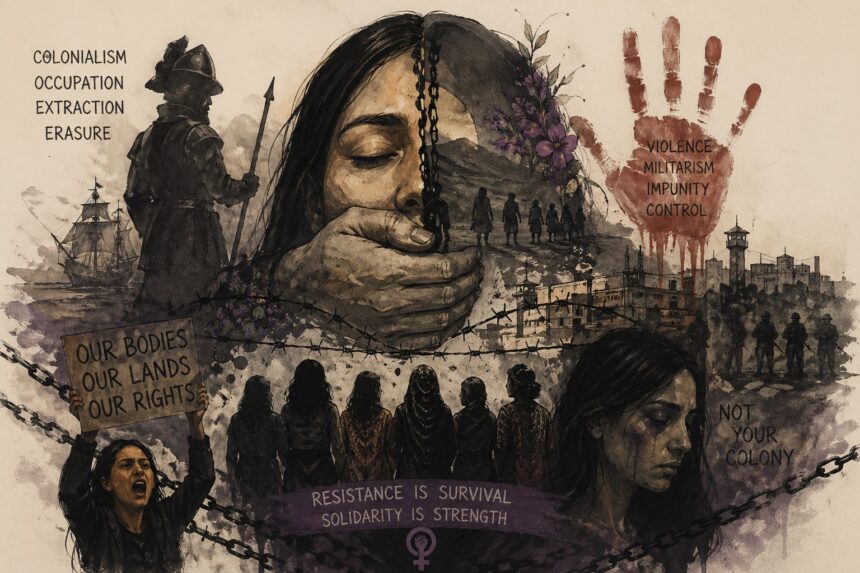
Violence against women is often addressed within the narrow boundaries of criminal law. When a woman is killed, disappears, is subjected to sexual assault, or dies under suspicious circumstances, the first questions usually concern the identity of the perpetrator, the relationship between the perpetrator and the woman, the motive behind the incident, and the progress of the criminal investigation. These questions are, of course, indispensable. Yet they are not sufficient on their own. Violence against women, especially when it concerns Indigenous peoples, racialized communities, groups affected by war and displacement, impoverished regions, and territories governed through security-oriented policies, cannot be explained solely through the act of an individual perpetrator. It is often produced at the intersection of historically constituted inequalities, the functioning of state institutions, practices of impunity, data gaps, economic exclusion, gender regimes, and racial or ethnic hierarchies.
For this reason, femicides, suspicious deaths of women, disappearances, sexual violence, human trafficking, forced entry into prostitution, domestic violence, and the inability to access state protection should not be treated as isolated events. They must instead be understood as different manifestations of the same structural problem. The point is not to reduce every case to a single cause. Rather, it is to preserve the specific legal and material context of each case while making visible the broader order that makes their repetition possible. The killing or disappearance of a woman is not only a matter of the perpetrator’s will. It is also connected to an institutional environment in which the perpetrator can act, in which risk is foreseeable but not prevented, complaints are not taken seriously, investigations are delayed, and evidence is not properly preserved (CEDAW Committee, 2017; European Court of Human Rights, 2009).
International reports on violence against Indigenous women offer an important analytical framework in this respect. Canada’s National Inquiry into Missing and Murdered Indigenous Women and Girls does not treat violence merely as the sum of isolated crimes. It analyzes this violence together with colonial structures, racism, sexism, economic exclusion, the child welfare system, policing practices, and the state’s ongoing failures to fulfil its human rights obligations. The report emphasizes that violence against Indigenous women, girls, and 2SLGBTQQIA+ people is not only a matter of public policy, but also a question of domestic and international law. This approach shows why it is insufficient to confine violence against women to the categories of a “family matter,” a “cultural problem,” or an “individual crime” (National Inquiry, 2019).
The report on Kānaka Maoli women and girls in Hawai‘i points to a similar problem. According to the report, the scope of violence against Kānaka Maoli women and girls remains difficult to grasp because of the lack of accessible data and the systematic disregard of state institutions for their safety and wellbeing. The report does not limit the concept of violence against Native Hawaiian women and girls to physical assault or homicide. It also includes the social, economic, cultural, institutional, and historical causes that contribute to ongoing violence and systemic erasure. It further notes that the category of “missing” may be connected to human trafficking and to the military-prostitution complex. This broad definition shows that violence against women must be examined not only at the moment of death or disappearance, but also within the wider social conditions that make such violence possible (Hawai‘i State Commission, 2022).
Amnesty International’s report on sexual violence against Indigenous women in the United States similarly demonstrates that violence cannot be reduced to the individual perpetrator. According to the report, Native American and Alaska Native women are at least 2.5 times more likely to be raped or sexually assaulted than women in the United States in general. The report states that the federal government has chronically underfunded Indigenous police forces, courts, and medical services, that federal and state courts have failed to prosecute perpetrators effectively, and that tribal courts have historically had limited jurisdiction, particularly in relation to non-Native suspects. This situation shows that sexual violence is not only related to the act of the perpetrator, but also to an institutional architecture that restricts access to justice (Amnesty International, 2007).
What these reports have in common is that they do not reduce violence against women to an explanation based on “culture.” Patriarchy, domestic violence, honour discourse, gender roles, and male domination are undoubtedly central to the analysis. However, these elements are not independent from the historical and contemporary policies of the state, processes of displacement, impoverishment, policing practices, data gaps, racism, barriers to justice, and regimes of impunity. On the contrary, the most severe forms of violence against women often emerge precisely at the intersection of these fields (CEDAW Committee, 2017; CEDAW Committee, 2022).
The central aim of this article is to rethink violence against women from the perspective of human rights law by drawing on reports concerning disappearances, killings, and sexual violence against Indigenous women. This framework will later provide an important analytical ground for examining femicides, suspicious deaths of women, and violence against Kurdish women in Turkey. In Turkey as well, violence against women should not be understood only as “male violence.” It must also be analyzed in relation to the right to life, the prohibition of discrimination, the duty to conduct an effective investigation, the obligation to protect, access to justice, data collection, impunity, and structural inequalities (CEDAW Committee, 2017; European Court of Human Rights, 2009).
This approach does not diminish the responsibility of the perpetrator. On the contrary, it situates the perpetrator’s criminal responsibility together with the positive obligations of the state. The state’s duty is not limited to conducting an investigation after a killing has taken place. It also has the duty to prevent foreseeable risks, operate protection mechanisms effectively, conduct prompt and impartial investigations in cases of disappearance and suspicious death, preserve evidence, punish perpetrators, ensure victims’ and families’ access to truth, and transform the discriminatory structures that make violence possible (CEDAW Committee, 2017; European Court of Human Rights, 2009).
Therefore, the central question of this article is not only “Who kills women?” An equally important question is this: What historical, political, legal, and institutional order makes the disappearance, killing, sexual violation, or suspicious death of certain women more possible, more invisible, and more likely to remain unpunished?
Answering this question requires addressing violence against women at the level of both criminal law and human rights law. The article will therefore first examine reports on violence against Indigenous women in Canada, the United States, Hawai‘i, Australia, and other contexts, and then carry the human rights principles emerging from these reports into the context of femicides and violence against Kurdish women in Turkey. The aim is not to equate different geographies with one another, but to comparatively discuss recurring patterns of state responsibility, impunity, data deficiency, discrimination, and structural violence across different contexts (Amnesty International, 2007; Australian Senate Legal and Constitutional Affairs References Committee, 2024; Hawai‘i State Commission, 2022; National Inquiry, 2019).
The State’s Human Rights Obligations: Prevention, Protection, Investigation, Punishment, and Reparation
Violence against women is not, from the perspective of human rights law, merely a private act between a perpetrator and a victim. The individual criminal responsibility of the perpetrator is, of course, central. Yet the question posed by human rights law is not limited to this. Legally, the central issue is whether the state has exercised due diligence to prevent such violence, protect persons at risk, conduct an effective investigation after violence has occurred, punish perpetrators, and provide victims and their families with access to truth and reparation (CEDAW Committee, 2017). Therefore, in cases of femicide, disappearance, suspicious death, sexual violence, and human trafficking, state responsibility does not depend solely on whether the perpetrator is a public official. Even when the perpetrator is a private individual, the state’s failure to prevent a known or foreseeable risk, to operate protection mechanisms, or to conduct an effective investigation afterwards may give rise to international responsibility (Inter-American Court of Human Rights, 1988; European Court of Human Rights, 2009).
This approach is known in human rights law as the obligation of “due diligence.” States cannot simply prohibit violence against women in formal legal terms; they must also establish and operate the institutional, administrative, judicial, and social mechanisms that make this prohibition effective. General Recommendation No. 35 of the CEDAW Committee states that gender-based violence against women is a form of discrimination and that states may be responsible both for acts and omissions of their own organs and, under certain conditions, for failing to exercise due diligence in relation to acts committed by private persons. This means that violence against women cannot be treated merely as a matter of the “private sphere” or as a “domestic issue” (CEDAW Committee, 2017).
The same principle is well established in regional human rights jurisprudence. The basic approach developed by the Inter-American Court of Human Rights in Velásquez Rodríguez is that the fact that a human rights violation was not directly committed by a state agent does not automatically exclude state responsibility. The state may be held responsible when it has failed to exercise due diligence to prevent the violation or to investigate it effectively afterwards. This approach has become one of the most important principles of human rights law in relation to missing persons, enforced disappearances, killings, and systematic impunity (Inter-American Court of Human Rights, 1988).
The judgment of the European Court of Human Rights in Opuz v. Turkey is one of the most important examples of this principle in the context of violence against women in Turkey. The Court found that the Turkish authorities had failed to protect the applicant and her mother from domestic violence, and held that there had been violations of the right to life, the prohibition of torture and ill-treatment, and the prohibition of discrimination. The significance of the judgment is not limited to the finding of violations in a particular case. Opuz showed that domestic violence is not an issue from which the state can withdraw by invoking the “private sphere,” and that violence against women must be assessed together with the prohibition of discrimination (European Court of Human Rights, 2009).
Within this framework, the state’s obligation can be understood in five stages. The first stage is prevention. The state must identify the structural conditions that make violence against women possible and develop policies to reduce them. This does not merely mean defining offences in the criminal code. Data collection, risk assessment, training, social services, economic support, safe shelters, sexual violence crisis centres, cooperation with women’s organizations, the child protection system, and mechanisms to combat discrimination are also part of the obligation to prevent violence (CEDAW Committee, 2017).
The second stage is protection. If a woman has previously been threatened, has filed a complaint of violence, is being stalked, is at risk because she wants to separate or divorce, faces threats of sexual violence or blackmail, or has been reported missing, the state’s obligation to act becomes more stringent. At this point, the existence of law alone is not sufficient. What matters is the duration of protection orders, the way they are implemented, whether violations are sanctioned, the attitude of law enforcement, the victim’s access to safe accommodation, and whether complaints are taken seriously (CEDAW Committee, 2017; European Court of Human Rights, 2009).
The third stage is effective investigation. An effective investigation does not merely mean opening a file. The investigation must be independent, impartial, prompt, diligent, and victim-centred. In cases involving missing women, suspicious deaths, or sexual violence, the first hours and days are of vital importance. The preservation of evidence, the examination of digital materials, the collection of camera footage, the hearing of witnesses, the transparent conduct of autopsy and forensic procedures, and the access of families and lawyers to the file are all elements that determine whether an investigation is effective (CEDAW Committee, 2017; European Court of Human Rights, 2009). The state’s responsibility is not limited to identifying the perpetrator. Any negligence, failure of protection, fault of law enforcement, or responsibility of public officials must also be investigated (European Court of Human Rights, 2009).
The fourth stage is punishment. In cases of violence against women, impunity does not only mean acquittal. The gendered application of unjust provocation or good-conduct reductions, the absence of sanctions against perpetrators who violate protection orders, the questioning of the victim’s credibility in sexual violence cases, and the failure to adequately evaluate power relations connected to public office or uniform are also part of the regime of impunity. The severity of the sentence matters, but so do the language and reasoning of the judgment. Courts do not merely resolve individual disputes; they also shape how violence against women is socially understood (CEDAW Committee, 2017).
The fifth stage is reparation. Reparation is not limited to financial compensation. It also includes the disclosure of truth, the provision of information to families, the recognition of institutional responsibility, psychological, legal, and social support for victims and their relatives, institutional reform to prevent recurrence, and the participation of women’s organizations in these processes (CEDAW Committee, 2017). Especially in cases of disappearance and suspicious death, families’ right to truth must be understood beyond the technical limits of criminal investigation (Inter-American Court of Human Rights, 1988).
Reports on violence against Indigenous women show strikingly how these obligations are violated in practice. Canada’s National Inquiry treats violence against Indigenous women, girls, and 2SLGBTQQIA+ people as a human rights crisis with systemic causes. The report states that this violence is produced not only by the behaviour of individual perpetrators, but also through colonial structures, state institutions, policing, the child welfare system, impoverishment, sexism, and racism. In the report, human rights instruments are not positioned merely as legal techniques, but as necessary tools for accountability and structural transformation (National Inquiry, 2019).
In the United States context, Amnesty International’s Maze of Injustice report shows how concrete the state’s obligations are in cases of sexual violence. According to the report, the full extent of sexual violence against Native American and Alaska Native women remains unknown. Victims may refrain from reporting because they fear that their privacy will not be protected, that the perpetrator will retaliate, or that justice will not be achieved. The report also identifies data gaps, jurisdictional confusion, the underfunding of Indigenous police and judicial institutions, the failure of federal and state courts to adequately prosecute perpetrators, and the jurisdictional limits of tribal courts as fundamental failures in the state’s obligation to protect (Amnesty International, 2007).
In relation to Turkey, the gap between law and practice is also decisive. The 2025 United Kingdom country policy and information note states that legal protections for women exist in Turkey, that gender-based violence is prohibited under criminal law, and that mechanisms such as Law No. 6284 and Violence Prevention and Monitoring Centres, known as ŞÖNİM, are in place. However, the same document also notes that gender-based violence is widespread, that its prevalence is difficult to measure because of the lack of a comprehensive data collection system, that the most recent national survey found that 38 percent of women had experienced physical and/or sexual violence, that there are problems in the implementation of protection and prevention orders, that shelter capacity is insufficient, and that some shelters in the southeast have been closed (United Kingdom Home Office, 2025).
Therefore, from a human rights perspective, the central issue is not simply whether there are laws in Turkey that protect women. The more accurate question is whether existing laws are implemented in a way that is effective, accessible, non-discriminatory, and trustworthy, especially for women in the most vulnerable situations (CEDAW Committee, 2017; United Kingdom Home Office, 2025). This question is generally important for femicides and suspicious deaths of women in Turkey. However, it becomes even more pressing in relation to Kurdish women, refugee women, women with disabilities, impoverished women, women pushed into sex work or human trafficking, and women who are politically targeted. These groups may face greater obstacles to accessing justice not only because of gender, but also because of intersecting factors such as ethnicity, class, language, political affiliation, geography, migration, disability, or sexual identity (CEDAW Committee, 2017; CEDAW Committee, 2022).
In short, from the perspective of human rights law, violence against women is not an area in which the state can evade responsibility by saying that it “did not know.” The prevalence of violence, recurring patterns of risk, violations of protection orders, suspicious deaths, disappearances, sexual violence, human trafficking, and the institutional obstacles faced by families seeking justice all raise the state’s obligations of foreseeability and due diligence. The state is responsible not only once the perpetrator is arrested, but from the moment a risk arises. When this responsibility is not fulfilled, violence against women ceases to be merely an isolated crime; it becomes a matter of human rights violation and structural impunity (CEDAW Committee, 2017; European Court of Human Rights, 2009).
The Colonial Ground of Violence Against Indigenous Women
One of the most important contributions of reports on violence against Indigenous women is that they do not approach violence merely as “crime,” “domestic violence,” or “male violence within the community,” but place it within a historical and institutional continuum. Their common emphasis is clear: the disappearance, killing, sexual violation, or increased vulnerability of Indigenous women within human trafficking networks cannot be explained solely through the actions of individual perpetrators. This violence is produced on a terrain where colonization, land dispossession, forced displacement, the removal of children from their families, poverty, policing practices, barriers to justice, racism, and patriarchy are deeply intertwined (National Inquiry, 2022; Australian Human Rights Commission, 2020).
At this point, Canada’s National Inquiry into Missing and Murdered Indigenous Women and Girls marks a fundamental threshold. The report does not treat violence against Indigenous women, girls, and 2SLGBTQQIA+ people only as a matter of criminal law, but analyzes it together with Canada’s colonial history and with the institutions that continue to operate in the present. In its preface, the report states that this violence arises from systemic factors that lead to the loss of dignity, humanity, and life for Indigenous women, and it names this violence as “race-based, identity-based, and gender-based genocide” . In the same section, the report states that Canadian laws and institutions continue to violate the fundamental human rights and Indigenous rights of Indigenous women, girls, and 2SLGBTQQIA+ people (National Inquiry, 2019).
This approach contains an important warning about how the concept of “culture” should be used when explaining violence against women. If violence is presented only as an “internal cultural problem” of Indigenous communities, the poverty, spatial exclusion, police violence, distrust of state institutions, and barriers to justice produced by colonization become invisible. By contrast, the Canadian report locates the roots of violence in both historical and contemporary institutions. For this reason, it positions missing and murdered women not only as victim figures, but at the centre of structural inequalities produced by Canada’s legal, policing, social service, child welfare, and health systems (National Inquiry, 2019).
The data provided by the report make this structural dimension visible. Although Indigenous women constitute a relatively small proportion of the female population in Canada, their proportion among female homicide victims is much higher. The report notes that the RCMP identified 1,181 “police-recorded incidents of Aboriginal female homicides and unresolved missing Aboriginal females” between 1980 and 2012. In the same section, the report states that Indigenous women represented approximately 16 percent of female homicides between 1980 and 2012, while constituting only 4 percent of the female population. More recently, Indigenous women and girls have been reported to represent 24 percent of female homicide victims. According to the report, Indigenous women and girls are 12 times more likely to be missing or murdered than other women in Canada, and 16 times more likely than white women (National Inquiry, 2019).
These figures are important in two respects. First, they show that violence against Indigenous women is not exceptional, but structural. Second, they reveal the inadequacy of a criminal law approach focused only on the perpetrator. The numbers show that a particular social group is persistently exposed to higher levels of risk. In such a situation, the state’s obligation is not merely to open an investigation after each case, but to identify why this risk is concentrated among a specific group and to eliminate the conditions that produce it (CEDAW Committee, 2017; CEDAW Committee, 2022).
The report on Kānaka Maoli women and girls in Hawai‘i offers a similar framework. One of the most striking aspects of the report is that it places colonization directly at the centre of violence. The report states that the “piko,” or centre, of violence against Kānaka Maoli women and girls is colonization. This colonization is not defined merely as an event that took place in the past, but as a structure that continues today through economic, social, environmental, and legal arrangements. According to the report, Kānaka Maoli women have been targeted within colonial processes both by gendered violence and by practices of displacement and erasure (Hawai‘i State Commission, 2022).
The Hawai‘i report also explicitly discusses how the female body was sexualized and commodified in the process of colonization. According to the report, the bodies of Kānaka Maoli women were constructed as a space open to the sexual access of Western men; prostitution, missionary morality, the maritime economy, military presence, and tourism constituted different historical layers of this process. In the visual titled “Timeline of Sex Trade Expansion in Hawai‘i,” the report traces a historical line from the first recorded case of human trafficking in 1825, when an American sea captain reportedly purchased an eight-year-old part-Hawaiian girl from her father, to the establishment of the first military base in 1907, Hawai‘i’s recognition of sex trafficking as a felony in 2016, and the first case in 2022 in which a U.S. military member was held accountable for trafficking Native Hawaiian girls. This timeline shows that sexual exploitation must be understood not only through individual crimes, but also together with military, economic, and colonial structures (Hawai‘i State Commission, 2022).
The concept of “systemic inequalities” used in this report is also important. When explaining violence against Kānaka Maoli women and girls, the report uses the term “systemic inequalities” rather than individualizing language such as “risk factors”. This choice is not merely terminological. The concept of “risk factors” often carries the danger of presenting the victim’s living conditions as natural or personal characteristics. By contrast, the concept of “systemic inequalities” names the social mechanisms through which violence is produced. Poverty, substance dependency, contact with the child welfare system, homelessness, young people’s exposure to sexual exploitation as a means of survival on the streets, and contact with the criminal justice system are not individual “weaknesses,” but material conditions produced by a colonial order (Hawai‘i State Commission, 2022).
The Wiyi Yani U Thangani report in Australia has a distinct importance because it centres the voices of Indigenous women themselves. The report argues that the human rights of Aboriginal and Torres Strait Islander women and girls must be evaluated not as objects of state policy, but through their own words, demands, and knowledge. Its methodology takes into account the holistic and interconnected nature of women’s lives. Housing, health, education, child protection, criminal justice, culture, connection to land, and economic participation are treated as distinct fields, but not as separate from one another. The Australian Human Rights Commission describes the report as grounded in the right of Aboriginal and Torres Strait Islander women and girls to self-determination, and as based on the voices of women and girls gathered through national engagement processes (Australian Human Rights Commission, 2020).
The strength of this report lies in the fact that it does not confine violence against women to the categories of crime or domestic violence. The insecurity experienced by Aboriginal and Torres Strait Islander women is also analyzed in relation to housing rights, education, health, cultural rights, the removal of children from families, poverty, and the criminal justice system. The report explains a human rights-based approach through the PANEL principles: participation, accountability, non-discrimination and equality, empowerment, and legality. This framework emphasizes that Indigenous women should not be seen merely as victims to be protected, but as rights-bearing subjects (Australian Human Rights Commission, 2020).
Policing and criminal justice also occupy an important place in the Australian report. The report notes that Aboriginal and Torres Strait Islander women may hesitate to contact the police when they experience violence. The reasons include fear that the police may cause further harm, discriminatory attitudes, the normalization of violence, the failure to take complaints seriously, and delayed intervention. The testimonies included in the report show that women experience problems not only with the perpetrator within the family, but also with the institutions from which they are supposed to seek help. This demonstrates that the state’s obligation to protect is measured not only by the existence of laws, but also by the behaviour of the institutions that implement those laws (CEDAW Committee, 2017; Australian Human Rights Commission, 2020).
The common conclusion emerging from these three contexts is this: violence against Indigenous women is not merely the sum of crimes committed by private individuals. It is a field of human rights violations that has been historically constituted and continues today through institutions. The disappearance, killing, or exposure of women to sexual exploitation often occurs together with land dispossession, poverty, the fragmentation of family structures, distrust of state institutions, interventions by child welfare systems, policing practices, racial stigmatization, and impunity (National Inquiry into Missing and Murdered Indigenous Women and Girls, 2019; Hawai‘i State Commission on the Status of Women, 2022; Australian Human Rights Commission, 2020).
This framework is directly important for the analysis to be developed later in relation to Turkey and Kurdish women. In Turkey, femicides and suspicious deaths of women are often explained through concepts such as “family,” “honour,” “jealousy,” “divorce,” or “individual male violence.” Yet reports on Indigenous women show that such explanations can only become meaningful when they are situated within a broader structural analysis. If a woman has previously filed a complaint, requested protection, been reported missing, made allegations of sexual violence or blackmail, or if a particular community appears to be systematically exposed to higher levels of risk, then the issue is not only the act of the perpetrator. What the state knew, what it ignored, how it operated its institutions, and which groups it left less protected must also become part of the analysis (CEDAW Committee, 2017; European Court of Human Rights, 2009).
For this reason, the main lesson to be drawn from the literature on violence against Indigenous women is the need to avoid culturalist explanations. Violence cannot be explained only by “tradition,” only by “family,” only by “male anger,” or only by “poverty.” Each of these elements matters. However, each must be evaluated together with the state, law, economy, policing, history, and colonial arrangements. This is precisely what makes violence against women a human rights issue: violence must be located not only in the act of the perpetrator, but in the order that makes that act possible, foreseeable, repeatable, and often unpunished (CEDAW Committee, 2017; National Inquiry, 2019).
Data Gaps, Invisibility, and Impunity
In the field of violence against women, data gaps are not merely a technical deficiency. Especially in areas such as missing women, suspicious deaths, sexual violence, human trafficking, and being pushed into prostitution, the absence of data is a human rights problem that directly affects the state’s obligation to protect and prevent. If the state does not know, or does not establish adequate mechanisms to know, which women are at greater risk, in which regions violence is concentrated, which complaints remain without result, which protection orders are violated, in which files the narrative of suspicious death or suicide comes to the fore, and which groups face systematic barriers to justice, then its capacity to prevent violence is also weakened (CEDAW Committee, 2017; United Kingdom Home Office, 2025).
For this reason, data are not merely statistics. Data are a way through which the state sees. Who is counted, who is recorded, whose ethnic identity, gender identity, age, geography, relationship to the perpetrator, and protection applications are documented also shows who is rendered invisible. When the disappearance of a woman is quickly closed within categories such as “running away,” “suicide,” “accident,” “family matter,” or “risky lifestyle,” this is often not only an investigative error. Such categories may also become instruments through which the state and society treat some women’s lives as less worthy of investigation (Hawai‘i State Commission, 2022; National Inquiry, 2019).
Reports on Indigenous women offer a very clear warning on this issue. The report on Kānaka Maoli women and girls in Hawai‘i places data gaps at the centre of the crisis. According to the report, because of the absence of accessible data and the systematic disregard of public institutions for the safety and wellbeing of Kānaka Maoli women and girls, the true scope of the crisis remains incomplete. The report states that existing statistics are extremely limited and therefore far from reflecting the actual scale of the problem. More importantly, it emphasizes that the absence of data produces a public and political consequence: the lack of data on Kānaka Maoli women may prevent the crisis from being recognized as an issue requiring resources, thereby deepening the erasure of Native Hawaiian women (Hawai‘i State Commission, 2022).
This finding shows how data gaps can turn into a human rights violation. Violence that the state does not record, disaggregate, or make visible ceases to become a matter of public policy. In such a situation, the violence experienced by women becomes invisible not only statistically, but also politically and legally. The Hawai‘i report’s expression “invisible crisis” is therefore significant. The crisis is not invisible; it has been made invisible. The absence of data does not mean the absence of violence. On the contrary, it often shows that violence is not being monitored, defined, prioritized, or resourced (Hawai‘i State Commission, 2022).
The Hawai‘i report also shows that data gaps are not only about the lack of numbers. The problem concerns how data are collected. According to the report, there is no standardized, holistic, and accessible system among institutions in Hawai‘i for collecting data on Kānaka Maoli women. Some institutions do not collect race-disaggregated data, while others do not store data in a way that can be used for research. Since gender data are often not disaggregated together with race, “Kānaka Maoli women” disappear as a separate category. Differences in data collection methods among police departments, the inconsistent use of racial categories, and the recording of Kānaka Maoli persons under other racial categories make it even more difficult to understand the scale of the crisis (Hawai‘i State Commission, 2022).
This has an important consequence from the perspective of human rights law. The state’s obligation to prevent discrimination is not fulfilled simply by including the principle of equality in legal texts. The state must establish data systems capable of showing how discrimination operates in practice. Without categories such as race, ethnicity, age, gender, gender identity, disability, geography, perpetrator profile, complaint history, protection order, investigation outcome, and court decision, it is not possible to see the structural patterns of violence. A pattern that cannot be seen cannot be prevented (CEDAW Committee, 2017; CEDAW Committee, 2022).
Canada’s Quebec supplementary report points to a similar problem. The report states that very little statistical information exists in Quebec concerning missing and murdered Indigenous women, girls, and 2SLGBTQQIA+ people, and that the existing data are incomplete because of constraints related to time, resources, and language. For this reason, the data are not sufficient to accurately reflect the situation in Quebec. The report also notes that national-level studies provide limited knowledge about regional realities such as Quebec and often do not examine the strategies used by Indigenous women or the resources to which they turn (National Inquiry, 2019).
This emphasis shows that the question of data is not merely quantitative. What is missing is not only numbers; what is also missing is an understanding of women’s own experiences, their strategies, families’ search for truth, and local contexts. The Quebec report therefore gives a central place to the testimonies of families and survivors. Some truths can be understood not only through official statistics, but also through families’ years-long searches, their relations with the police, the responses of institutions, and the silence of society. This shows that human rights research must be conducted not only through data sets, but also through testimony, memory, and institutional experience (National Inquiry, 2019).
Data gaps are also one of the central problems in relation to Turkey. The 2025 United Kingdom country policy and information note states that gender-based violence is widespread in Turkey, but that its prevalence is difficult to measure because there is no comprehensive national data collection system. The document notes that the most recent national prevalence survey was conducted in 2013–2014 and found that 38 percent of women had experienced physical and/or sexual violence in their lifetime. It also states that femicide data in Turkey differ across sources such as the Ministry of Interior, Bianet, and the We Will Stop Femicides Platform, and that the figures may be affected by underreporting (United Kingdom Home Office, 2025).
This difference is not merely a methodological problem. How femicides are defined, whether suspicious deaths of women are included in the category, and whether deaths initially recorded as suicide or accident are later reassessed directly affect the scope of femicide data. The fact that the We Will Stop Femicides Platform began reporting suspicious deaths of women separately from 2018 is therefore important. In cases where the killing of women can be presented as accident, suicide, or undetermined death, looking only at confirmed femicide data may render a significant part of violence invisible. The UK Home Office note also states that the We Will Stop Femicides Platform reports suspicious deaths of women separately because of an “increase in murders disguised as accidents and suicides” (United Kingdom Home Office, 2025; We Will Stop Femicides Platform, 2019).
The limited nature of official data in Turkey has made civil society data production even more important. Bianet’s male violence tally, the monthly and annual reports of the We Will Stop Femicides Platform, the reports of the Human Rights Association and the Human Rights Foundation of Turkey, and the application experiences documented by Mor Çatı and other women’s organizations partially fill the space left by the state. From the perspective of human rights law, however, this situation must be evaluated in two ways. On the one hand, civil society data perform a vital function in making femicides and male violence visible. On the other hand, the state’s failure to establish its own comprehensive, disaggregated, transparent, and reviewable data system is a failure of obligation that cannot be compensated for by the labour of civil society (Bianet, n.d.; We Will Stop Femicides Platform, 2019; CEDAW Committee, 2017).
This deficiency becomes even more critical in relation to Kurdish women. When the ethnic, regional, linguistic, class-based, and political dimensions of violence are not disaggregated, the conditions under which Kurdish women are exposed to violence cannot be seen. The 2025 country policy and information note on Turkey states that Kurdish women may face ethnic and linguistic barriers in accessing services, and that women in regions with large Kurdish populations may experience multidimensional poverty in relation to education, income, equality of opportunity, and language barriers. The same document also notes that some shelters in the southeast were closed, reducing the options available to women seeking to escape violence in the region (United Kingdom Home Office, 2025).
At this point, data gaps can turn into a mechanism that erases the specific experience of Kurdish women. When femicides are counted only within general Turkey-wide data, the regional and political context may disappear. When violence against Kurdish women is placed only within the categories of “domestic violence” or “honour,” factors such as forced migration, poverty, language barriers, security policies, the repression of women’s organizations, trustee policies, the closure of shelters, distrust of public institutions, and impunity become invisible. For this reason, disaggregated data are necessary not only for academic analysis, but also for effective protection policy (CEDAW Committee, 2017; United Kingdom Home Office, 2025).
The main lesson to be drawn from reports on Indigenous women is this: the absence of data does not reduce state responsibility; it increases it. In a context where violence is widespread, complaints are increasing, women’s organizations are issuing warnings, and suspicious deaths have become a matter of public debate, it is not sufficient for the state to say that there is “not enough data.” The state must treat the lack of data not as an excuse, but as a failure of obligation that must be remedied. The regular, disaggregated, publicly accessible, and independently reviewable collection of data on missing and murdered women is the first step of any prevention policy.
Impunity begins where violence against women is rendered invisible. A risk that cannot be seen is not prevented. Violence that is not recorded does not generate policy. Data that are not disaggregated conceal structural discrimination. When the category of suspicious death is not taken seriously, the possibility of homicide is weakened. When the testimonies of families and women’s organizations are ignored, truth is delayed. For this reason, data are not a technical appendix to the struggle for human rights; they are directly part of justice.
Policing, Access to Justice, and Impunity
The strongest common theme in reports on violence against Indigenous women is that women are confronted not only by perpetrators, but also by the very institutions from which they are expected to seek help. The police, prosecution offices, courts, health institutions, social service units, and shelter mechanisms may exist on paper as institutions of protection. Yet if these institutions act late, fail to take complaints seriously, use victim-blaming language, fail to collect evidence, leave violations of protection orders unsanctioned, or condemn families to years of searching for the truth, violence ceases to be only the act of the perpetrator. In such cases, violence is reproduced through the functioning of the state’s protection and justice mechanisms (CEDAW Committee, 2017; European Court of Human Rights, 2009).
The Maze of Injustice report on sexual violence against Indigenous women in the United States presents a very clear picture in this regard. According to the report, sexual violence against Native American and Alaska Native women is widespread, and even the available statistics reveal the gravity of the situation. However, the report’s main emphasis is on how this violence becomes invisible in processes of access to justice. Victims often refrain from reporting because they fear that their privacy will not be protected, that the perpetrator will retaliate, or that justice will not be achieved. The statement of one support worker quoted in the report, that women do not report because they think it will not make any difference, shows that the crisis of access to justice is not only legal, but also concerns the relationship of trust between women and institutions (Amnesty International, 2007).
The same report also shows that impunity cannot be explained only by the mistakes of individual prosecutors or police officers. In the United States context, the complexity of federal, state, and tribal jurisdictions weakens the protection of Indigenous women against sexual violence. The federal government’s long-term underfunding of Indigenous police forces, courts, and health services has weakened the mechanisms of first response and evidence collection. The failure of federal and state courts to prosecute perpetrators of rape effectively, together with the denial of tribal courts’ jurisdiction especially over non-Native suspects, pushes sexual violence cases into a structural field of impunity. The report therefore shows that the barrier to justice is not only the inability to identify or arrest the perpetrator, but also the failure of the legal architecture of jurisdiction to protect Indigenous women (Amnesty International, 2007).
The testimonies of Aboriginal and Torres Strait Islander women in Australia reveal a similar field of structural distrust. The Wiyi Yani U Thangani report states that, for Aboriginal and Torres Strait Islander women, the criminal justice system often becomes not a field that provides safety, but one that produces new traumas. The report notes that intersecting factors such as poverty, domestic violence, homelessness, substance use, and mental health issues increase women’s contact with the criminal justice system, and that once they enter the system, exiting it becomes extremely difficult. For this reason, the report emphasizes that the system expected to provide “safety” produces further harm for many women (Australian Human Rights Commission, 2020).
The policing experiences included in this report are particularly important. Women speak of discriminatory treatment by police, targeting, harassment, and neglect. The report also explicitly recalls the role of policing in the history of colonization in Australia. Historically, the police were among the institutions that implemented practices such as the forced removal of children from their families, displacement, segregation, and the administration of missions and reserves. This history forms the background to the distrust that Aboriginal and Torres Strait Islander communities continue to have toward the police and the criminal justice system. Therefore, present-day distrust of the police is not merely a matter of “perception”; it is the result of an institutional history with a living memory (Australian Human Rights Commission, 2020).
The same report also details women’s concerns about police inaction. Many women state that when they turn to the police for protection against crime and violence, they receive a late response or no response at all. They connect this inaction to racism within policing and to indifference toward the lives of Aboriginal and Torres Strait Islander peoples. Such inaction becomes especially visible in complaints concerning domestic violence, fights, bullying, discrimination, and racist threats. According to the report, there is a widespread perception among women that the police do not value the safety of Aboriginal and Torres Strait Islander peoples equally with the safety of other Australians (Australian Human Rights Commission, 2020).
These examples show that policing can operate in two directions in cases of violence against women. On the one hand, from the perspective of the state, the police are the first gate of protection and investigation. On the other hand, for communities that have historically been criminalized, racialized, or coded as security threats, the police may not be an institution that inspires trust. Therefore, the question “Why was no complaint filed?” cannot be directed only at the victim’s conduct. The more accurate question is: What historical and institutional conditions prevent women from trusting the police?
A similar issue can be observed in Turkey in relation to femicides and domestic violence more generally. Human Rights Watch’s 2022 report on Turkey shows that although protection and prevention orders are issued under Law No. 6284, serious gaps exist in their implementation. In the 18 cases examined in the report, women had applied to the police or prosecutor’s office and had obtained preventive orders, yet in some cases perpetrators were not subjected to effective sanctions despite violating those orders. In the most severe examples, six women were killed even though the authorities knew they were at risk and preventive orders had been issued against the perpetrators (Human Rights Watch, 2022).
This report clearly shows the inadequacy of the question “Does a legal mechanism exist?” In Turkey, mechanisms such as Law No. 6284, protection and prevention orders, Violence Prevention and Monitoring Centres, family courts, and law enforcement units do exist. However, the real question is whether these mechanisms are operated in a timely, effective, coordinated manner and in accordance with the severity of risk. According to the Human Rights Watch report, courts often issue very short-term preventive orders, risk assessment remains insufficient, the implementation of orders is not effectively monitored, and perpetrators who violate measures may remain unsanctioned (Human Rights Watch, 2022).
The case of Ayşe Tuba Arslan included in the report is one concrete example of this problem. Between 2018 and 2019, Arslan filed 23 complaints with the police and prosecutor’s office against her former husband and obtained four preventive orders. However, the perpetrator violated these orders repeatedly. Despite this, no effective sanction was imposed, and the harshest penalties he received remained at the level of a suspended prison sentence and fines. Arslan was later killed by her former husband. This case shows that the existence of a complaint does not in itself mean protection. The state’s obligation is not simply to record the complaint, but to effectively eliminate the risk (Human Rights Watch, 2022).
Another problem in Turkey’s protection mechanisms is the disconnection between data and implementation. The Human Rights Watch report notes that the number of prevention and protection orders increased from 2016 to 2021, but that state data do not provide information on how these orders were implemented. For example, in 2021, preventive orders were issued against 272,870 people, while protection orders were issued for 10,401 people. However, it is not systematically disclosed how many of these orders were violated, what sanctions were applied in cases of violation, how long women were actually protected, and how many women were killed despite protection orders (Human Rights Watch, 2022).
At this point, impunity is not only the low sentence imposed at the end of a trial. Impunity begins when no action is taken despite the violation of a protection order. Impunity is also produced when a complaint is not taken seriously, evidence is not collected, the risk posed by the perpetrator is assessed as low, the victim is forced to make her voice heard on social media, or the case moves forward only after public pressure. The Human Rights Watch report states that women, their daughters, or their lawyers in Turkey often have to turn to social media, the press, or television in order to push the authorities to act, and that this reveals the state’s failure to provide protection and respond adequately to risks (Human Rights Watch, 2022).
This situation does not require a direct equivalence between reports on Indigenous women and femicides in Turkey. Rather, it requires asking a similar human rights question. Why do relatives of victims have to struggle for years to ensure that investigations into disappearances, killings, or sexual violence are conducted effectively? Why are some women’s complaints taken seriously only after public pressure? Why do protection orders sometimes fail to prevent the perpetrator in practice? Why, in some cases, do families and women’s organizations have to monitor not only the perpetrator, but also the investigation itself?
These questions become more complex in the context of Kurdish women. Here, trust in state institutions is shaped not only by failures in cases of violence against women, but also by a broader history of security policies and conflict. War, forced migration, detentions, extrajudicial killings, disappearances, police violence, trustee policies, pressure on women’s organizations, and the criminalization of the Kurdish political sphere all affect the relationship women establish with state institutions. Therefore, access to justice for Kurdish women must be assessed not only in terms of their position “as women,” but also together with their ethnic, political, linguistic, class-based, and geographical positions.
It would therefore be accurate to say that policing, access to justice, and impunity are not external elements of violence against women. They are central fields that determine how violence continues, how it becomes invisible, and how it is repeated. The struggle against violence against women cannot be limited to the demand for harsher punishment. The central issue is whether all state institutions fulfil their duty of due diligence from the moment of application until the end of the investigation. Punishing the perpetrator is important. Yet before punishment becomes possible, the risk must be recognized, the woman must be protected, evidence must be collected, decisions must be implemented, and institutions must be held accountable.
The common lesson of reports on Indigenous women and of the experience of femicides in Turkey is clear: women’s right to life cannot be left dependent on the goodwill of the police, the interest of the prosecutor, the discretion of the court, or public pressure. The right to life requires the state to establish systematic, effective, non-discriminatory, and reviewable protection mechanisms. When these mechanisms do not function, violence is sustained not only by men, but also by institutional negligence, indifference, and the production of impunity.
Sexual Violence, Human Trafficking, and Moral Stigmatization
One of the most difficult areas to discuss in relation to violence against women concerns sexual violence, human trafficking, the sex industry, and being pushed into prostitution. This field is often trapped between two opposing languages. The first describes the sexual exploitation to which women are subjected as a moral “fall,” “corruption,” or “social decay.” The second focuses only on the individual crime of the perpetrator and pushes into the background the historical, economic, and institutional conditions that make women vulnerable to this violence. A human rights-based analysis, however, must move beyond both languages. Women subjected to sexual exploitation are not the perpetrators of violence; they are often persons left unprotected within poverty, childhood trauma, racism, displacement, distrust of state institutions, policing practices, impunity, and social stigmatization (CEDAW Committee, 2017; National Inquiry, 2019).
Reports on violence against Indigenous women provide important conceptual clarity at this point. Canada’s National Inquiry does not approach the sex industry, sexual exploitation, and human trafficking as matters of women’s “moral choice” or as an “internal community problem,” but addresses them together with security, justice, racism, sexism, and colonial violence. The report states that the experiences of Indigenous women, girls, and 2SLGBTQQIA+ people in relation to the sex industry, sexual exploitation, and human trafficking repeatedly emerged in the accounts of families, survivors, experts, and witnesses. These accounts focus not only on sex work or human trafficking, but also on how women’s safety, health, and access to justice can be secured (National Inquiry, 2019).
A particularly important point emphasized in this report is the difficulty of producing an accurate picture. Because association with the sex industry remains intensely stigmatized, many people avoid reporting their experiences in this field. Moreover, sharing such information may increase the risk of criminalization, discrimination, and further violence. According to the report, institutional reluctance to keep more accurate records concerning the relationship of Indigenous women, girls, and 2SLGBTQQIA+ people to the sex industry deepens this lack of information. The report connects this reluctance to a long-standing view that treats these persons as “disposable” or “unworthy” of attention (National Inquiry, 2019).
This finding shows how moral stigmatization operates in cases of sexual exploitation and human trafficking. Stigmatization is not merely society’s negative attitude toward the victim. It also shapes the way institutions intervene. If a woman is associated with the sex industry, she may be seen as less “credible,” less “innocent,” and less “worthy of protection” when she is subjected to violence. This may affect the seriousness of the investigation, the attitude of the police, the way the prosecution handles the file, and the value the court gives to the victim’s account. In this way, moral stigma becomes a mechanism that directly produces impunity (National Inquiry into Missing and Murdered Indigenous Women and Girls, 2019; CEDAW Committee, 2017).
The Canadian report also acknowledges that there are different feminist and Indigenous perspectives on the sex industry. Some witnesses view sex work as inherently exploitative and as an area that should be abolished, while others argue that the discussion should be framed not through punishment or moral judgment, but through safety, rights, and protection from violence. The report’s central conclusion, beyond these different positions, is the need for a framework centred on safety and the right to life. According to the report, the central issue is not first how women are labelled, but whether they are protected from violence (National Inquiry, 2019).
The findings of the report are clear in this respect. Police services struggle to respond effectively to human trafficking, sexual exploitation, and violence against women and 2SLGBTQQIA+ people in the sex industry. Human trafficking and sexual exploitation offences are difficult to identify, and this difficulty is compounded by challenges in investigation and prosecution. Existing laws do not sufficiently take into account power inequalities and social stigmatization, and therefore do not effectively increase the safety of Indigenous women, girls, and 2SLGBTQQIA+ people. The report also notes that Indigenous women and 2SLGBTQQIA+ people in the sex industry do not trust that police will keep them safe because of the criminalization of their work, the racial and sexual discrimination they encounter, and the social stigma attached to the sex industry (National Inquiry, 2019).
The Hawai‘i report addresses this issue more explicitly within a colonial and military history. The increased vulnerability of Kānaka Maoli women and girls to sexual exploitation is discussed not merely as a contemporary problem related to human trafficking or the sex industry, but in relation to Hawai‘i’s history of occupation, militarization, tourism, and colonial economy. The report’s use of the expression “military-prostitution complex” is important. It shows how women’s bodies are commodified within military presence, the tourism economy, sexual access, and colonial power relations. The historical timeline included in the report shows that sexual exploitation and human trafficking in Hawai‘i are not accidental, but part of a structure with long historical roots (Hawai‘i State Commission, 2022).
In this context, sexual exploitation cannot be addressed only under the heading of “prostitution.” From the perspective of human rights analysis, more accurate concepts include being made vulnerable to sexual exploitation, blackmail, relations of dependency, economic coercion, childhood abuse, homelessness, substance use, human trafficking, policing, and impunity. These concepts make visible the conditions in which violence is produced without confining the victim to a moral category. Such a language avoids expressions suggesting that women have been “fallen” or “morally corrupted”; instead, it asks under what structural conditions women have been left unprotected (CEDAW Committee, 2017; Hawai‘i State Commission, 2022).
This point is also especially important for the representation of women living in Muslim, Middle Eastern, or colonial contexts. Lila Abu-Lughod’s article “Do Muslim Women Really Need Saving?” shows how representations of women as “victims in need of saving” are often intertwined with discourses of military intervention, cultural superiority, and colonial power. The article’s central warning is that women’s experiences of violence should not be reduced to cultural explanations. The discourse of “saving women” may appear to make women’s real experiences of violence visible, but it can also detach those experiences from their historical, political, and economic contexts and turn them into part of another language of domination (Abu-Lughod, 2002).
This warning is highly important in discussions of sexual violence and exploitation against women. When a community is represented through its women as “backward,” “honour-bound,” “misogynistic,” or “in need of civilization,” the women of that community are erased twice. First, they are erased under the patriarchal pressures of their own society. Second, they are re-objectified by the dominant discourse as victims to be saved. For this reason, the language of human rights must not deny the violence experienced by women, but it must also avoid confining that violence within culturalist and colonial representations (Abu-Lughod, 2002).
This discussion has particular importance in the context of Turkey. Violence against women and femicides, especially when Kurdish women are concerned, have long been explained through concepts such as “honour,” “custom,” “tribe,” “backwardness,” and “cultural violence.” In some concrete cases, these concepts may help explain the discourse of the perpetrator or particular forms of social pressure. However, when used alone, they render invisible the dimensions of the state, poverty, forced migration, war, security policies, impunity, and institutional negligence. As Dicle Koğacıoğlu discusses in “The Tradition Effect,” explaining honour killings only through “tradition” pushes into the background the role of the state and institutions in reproducing this violence (Koğacıoğlu, 2004).
For this reason, if sexual violence, being pushed into prostitution, drugs, blackmail, and the production of women’s vulnerability are to be discussed in the context of Turkey and Kurdish women, a rights-based language must be used instead of a moralizing one. Women should not be treated as figures who have been “fallen,” “stained,” whose “honour has been spoiled,” or who need to be “saved.” They must be approached as political subjects whose rights have been violated, who must be protected, and who also carry out their own struggle for justice. Such a language makes patriarchy visible while keeping the state’s positive obligations at the centre (CEDAW Committee, 2017; Koğacıoğlu, 2004).
The main human rights conclusion of this section is as follows: sexual violence and human trafficking are not only crimes under criminal law; they are also fields that test the state’s obligations of prevention, protection, investigation, prosecution, and reparation. If the state treats women made vulnerable to sexual exploitation as less worthy of protection because of moral stigma; if the police cannot secure victims’ trust; if data are not collected; if human trafficking networks are not effectively investigated; if the safety and right to life of women associated with the sex industry are not adequately protected, then the issue is not only individual crime, but structural human rights violation.
For this reason, in the later sections of this report on Turkey and Kurdish women, headings such as “prostitution,” “drugs,” “blackmail,” and “sexual exploitation” should be addressed not through the language of moral collapse, but through the language of vulnerability and state responsibility. The real question is not what women did, but under what conditions they were left exposed to violence, blackmail, exploitation, and impunity. For a human rights analysis, the starting point is precisely here.
Transitioning to Turkey: Femicides, Suspicious Deaths, and the State’s Obligation to Protect
The main lesson emerging from reports on violence against Indigenous women is that violence against women cannot be explained only through the perpetrator, the family, or culture. The same method is also important for Turkey. Femicides, suspicious deaths of women, domestic violence, sexual violence, and the ineffectiveness of protection mechanisms in Turkey must be assessed not only as individual male violence, but also in relation to the state’s obligations to prevent, protect, investigate, punish, and provide reparation. This approach does not diminish the responsibility of the perpetrator. On the contrary, it makes the social and institutional ground that enables the perpetrator’s act part of the legal analysis (CEDAW Committee, 2017; European Court of Human Rights, 2009).
It would not be accurate to say that the legal framework on violence against women in Turkey is entirely absent. The Constitution recognizes the principle of equality, Law No. 6284 includes measures to protect women and family members against violence, mechanisms such as ŞÖNİM operate in all provinces, and criminal law defines sexual assault, threats, injury, homicide, stalking, and certain forms of gender-based violence as crimes. However, from the perspective of human rights law, the decisive issue is not only the existence of legal regulations. The real question is whether these regulations are implemented for women at risk in a timely, effective, non-discriminatory, and accessible manner. The 2025 country policy and information note of the United Kingdom Home Office acknowledges that legal protections exist in Turkey, but also states that gender-based violence is widespread, that there is no comprehensive national data collection system, that the most recent national prevalence survey dates from 2013–2014, and that this survey found that 38 percent of women had experienced physical or sexual violence in their lifetime (United Kingdom Home Office, 2025).
The same information note presents a dual picture regarding protection and support mechanisms in Turkey. On the one hand, ŞÖNİM centres, specialized law enforcement units, electronic monitoring measures, family courts, protection and prevention orders, shelters, and legal aid mechanisms exist. On the other hand, lack of resources, problems of inter-institutional coordination, short-term decisions, weak implementation, insufficient shelter capacity, the closure of some shelters in southeastern provinces, and the social, economic, and linguistic barriers women face in accessing services are identified as serious problems. It is particularly important that the document notes that Kurdish women may face ethnic and linguistic barriers in accessing services. This point shows that violence against women must be assessed not only along the axis of gender, but also in relation to ethnicity, language, geography, and class (United Kingdom Home Office, 2025).
One of the most fundamental problems in the field of femicides in Turkey is the lack of official, transparent, disaggregated, and publicly reviewable data. The We Will Stop Femicides Platform, Bianet, the Human Rights Association, the Human Rights Foundation of Turkey, and women’s organizations have produced civil society data in this field for years. However, this labour of civil society does not remove the state’s own positive obligation. Indeed, the UK Home Office information note states that one of the main problems that makes it difficult to assess the prevalence of gender-based violence in Turkey is the absence of a comprehensive data collection system. The same document links the We Will Stop Femicides Platform’s separate reporting of suspicious deaths of women to the increase in deaths presented as accidents or suicides. This point shows why suspicious deaths of women are central to the discussion of femicide (United Kingdom Home Office, 2025; We Will Stop Femicides Platform, 2019).
There are significant differences between official data and civil society data concerning femicides and suspicious deaths in Turkey. These differences are not only numerical; they are also definitional. Whether a death is recorded as “femicide,” “suspicious death,” “suicide,” “accident,” “domestic violence,” “honour killing,” or “undetermined death” affects both the direction of the investigation and the nature of public policy. If the category of suspicious death is not taken seriously enough, some femicides may become statistically invisible. For this reason, the struggle against femicide requires looking not only at confirmed homicide data, but also at suspicious deaths of women, missing persons files, protection applications, violations of prevention orders, and the quality of investigation processes (CEDAW Committee, 2017; United Kingdom Home Office, 2025).
Quantitative studies on femicide provide important data for understanding the spatial, economic, and social dimensions of violence in Turkey. Kerim Can Kavaklı’s province-level analysis seeks to explain why women’s murders are more concentrated in some localities than in others, and discusses the relationship between women’s murders and variables such as economic development, divorce rates, gender equality in education, and ethnic composition. One of the important findings of this study is that economic development alone does not reduce women’s murders. Rather, in poorer provinces where women challenge the status quo, for example through higher divorce rates or greater equality in education, male violence may be more likely to take lethal forms. This finding shows that femicides cannot be explained only through “backwardness” or “culture”; the imbalance between women’s empowerment and the economic and institutional capacity for protection may also shape violence (Kavaklı, 2022).
Aygül Anavatan and Eda Yalçın Kayacan’s time series model also examines the relationship between economic variables and femicides. The study analyzes the relationship between femicides, female unemployment, male unemployment, and inflation between 2013 and 2021. The findings indicate that an increase in female unemployment increases femicides and that women’s economic freedom is an important factor in reducing femicides. Another issue emphasized by the study is that the lack of regular, reliable, and transparent collection of femicide data limits analysis. This is also important for legal analysis, because data deficiency is not only a limitation for academic modelling, but also a limitation for the state’s prevention policy (Anavatan & Yalçın Kayacan, 2024).
Spatial analyses show that the geographical distribution of femicides is not accidental. A spatial analysis study examining 3,598 femicide cases in Turkey between 2009 and 2022 at the provincial level found positive spatial autocorrelation and significant clustering in some regions. The importance of such studies lies in the fact that they allow femicides to be understood not only as isolated events, but as a field of rights violations that cluster spatially and are related to local conditions. However, such studies remain incomplete unless they are complemented by qualitative dimensions such as suspicious deaths of women, missing persons files, ethnic and linguistic barriers, trust in public institutions, and security policies (Altunbaş & Aksu, 2024).
At this point, a more careful analysis is required for Kurdish provinces. Some forensic and criminological studies have examined the categories of “honour” or “customary” homicide in provinces such as Diyarbakır and have shown that family, kinship, economic dependency, and control over women’s sexuality play an important role in such files. For example, the study examining “customary homicide” files in Diyarbakır analyzes 28 finalized files between 2007 and 2012, states that most of the victims were women, that all perpetrators were men, and that all female victims were killed by relatives or kin. These data show the role of patriarchal family structures and control over women’s sexuality in the production of violence (Yılmaz et al., 2015).
However, such studies should not be confined to a culturalist language. When categories such as “honour,” “custom,” “tradition,” and “family” are used on their own, they may push into the background the role of the state, war, forced migration, poverty, urbanization, inadequacies in protection mechanisms, and impunity. Explaining violence against women only through the “traditional structure of Kurdish society” obscures both Kurdish women’s real demands for justice and the state’s obligation to protect and conduct effective investigations. For this reason, the data provided by forensic studies must be read together with a critical feminist and human rights perspective (Koğacıoğlu, 2004; CEDAW Committee, 2017).
The 2024 first six-month regional report of the Human Rights Association’s Diyarbakır Branch shows that violence against women in Kurdish provinces cannot be separated from the broader environment of human rights violations. According to the report, at least 3,895 rights violations were identified in the region during the first six months of 2024. In the same period, at least 59 women lost their lives as a result of attacks on women’s right to life, including 19 suspicious deaths, 30 deaths caused by domestic violence, and 10 deaths caused by violence in the public sphere. The report also addresses multiple areas of violation in the region, including detentions, arrests, house raids, allegations of torture and ill-treatment, bans on meetings and demonstrations, prison violations, and trustee practices. This picture shows that violence against women in the region must be assessed within a broader environment of security policies, rights violations, and impunity (Human Rights Association Diyarbakır Branch, 2024).
The importance of this report lies in the fact that it does not limit femicides and suspicious deaths to the category of domestic violence. The report also documents, in the same period, headings such as law enforcement violence, special security zones, bans on meetings and demonstrations, prison violations, trustee policies, and interventions in political rights. This situation requires thinking about the violence faced by Kurdish women not only under the heading of “violence against women,” but also together with the political and security regime of the region. Violations of women’s right to life, suspicious deaths, barriers to justice, and the pressure placed on the work of women’s organizations are not separate issues in this context (Human Rights Association Diyarbakır Branch, 2024).
The debate on violence against women in Turkey cannot be considered independently from the decision to withdraw from the Istanbul Convention. Although Turkey remains bound by international human rights obligations such as CEDAW and the European Convention on Human Rights, withdrawal from the Istanbul Convention has been assessed by women’s organizations and international human rights mechanisms as a serious step backwards. The UK Home Office information note states that Turkey’s withdrawal from the Istanbul Convention has been widely criticized, that some assessments argue that this withdrawal created confusion regarding the applicability of certain provisions under Law No. 6284, and that concerns persist regarding the effectiveness of protection mechanisms in combating violence against women (United Kingdom Home Office, 2025).
In summary, femicides and suspicious deaths of women in Turkey emerge in the gap between the existence of legal regulations and deficiencies in implementation. The killing, disappearance, or suspicious death of women cannot be explained solely through the individual act of the perpetrator. Whether the risk was known in advance, how complaints were received, whether protection orders were implemented, whether evidence was preserved, how suspicious deaths were classified, whether the work of women’s organizations was supported, and whether the state produced disaggregated data are all central to human rights responsibility.
This is also the most important lesson that reports on Indigenous women offer for the Turkish context. Instead of reducing violence to culture, family, or individual masculinity, it is necessary to ask what the state knew, which risks it failed to prevent, which institutions it failed to operate effectively, and which women it left more vulnerable. Without asking this question, femicides, suspicious deaths, and violence against Kurdish women remain only a sum of events. From the perspective of human rights law, however, the issue is to make visible the structural conditions and state responsibility that make the repetition of these events possible.
Reading Through Case Files: Disappearance, Suspicious Death, Sexual Violence, and the Obligation to Conduct an Effective Investigation
It is not sufficient to treat violence against Kurdish women merely as part of the general picture of femicides. Some case files go beyond individual judicial incidents and become sites where the state’s obligations to conduct an effective investigation, provide protection, preserve evidence, investigate the responsibility of public officials, and ensure families’ access to truth are tested. For this reason, the cases of Gülistan Doku, Rojin Kabaiş, İpek Er, and Rojvelat Kızmaz should not be examined only through the question “what happened?” They must also be examined through the questions of how the investigation was conducted, which evidence was collected in time, which institutions did what, how the families’ demands were met, and why the perception of impunity became stronger.
The Gülistan Doku case is one of the most striking examples in this respect. Gülistan Doku, a student at Munzur University, disappeared in Dersim on 5 January 2020 and remained missing for years. From the outset, the file was discussed not only as a missing person case, but also through the effectiveness of the investigation, the preservation of evidence, the responsibility of public officials, and the struggle for justice carried out by the family and women’s organizations. The fact that the investigation entered a new phase in April 2026 should therefore be read not merely as a judicial development, but also as the belated visibility of a demand for an effective investigation that had been voiced for years. According to Bianet, Tuncay Sonel, who was governor of Tunceli at the time of Gülistan Doku’s disappearance, was taken into custody in 2026 within the scope of the investigation (Bianet, 2026a).
Within the same investigation, it was reported that Mustafa Türkay Sonel, the son of the former governor, was also arrested. According to Bianet, the Doku family’s lawyer, Ali Çimen, stated that Sonel was arrested on allegations of “qualified homicide as well as non-consensual sexual assault.” These allegations remain the subject of judicial proceedings and must be treated not as final judgments, but as serious allegations that have expanded the scope of the investigation. The human rights significance of the file lies not only in the allegation concerning a perpetrator, but also in the burden of truth and justice that years of disappearance and investigative uncertainty have placed on the family (Bianet, 2026b).
The Gülistan Doku case brings together two levels in the discussion of violence against Kurdish women. The first is the need to establish the fate of a missing woman and, if perpetrators exist, to punish them. The second is the question of how independent, impartial, and effective an investigation can be when the file includes persons allegedly connected to public power. This second level is decisive from the perspective of human rights law. The state’s obligation to conduct an effective investigation requires not only investigating private individuals, but also examining, without delay and in an impartial and comprehensive manner, the possible role of public officials or persons connected to public authority (European Court of Human Rights, 2009; CEDAW Committee, 2017).
The Rojin Kabaiş case also shows the importance of evidence, forensic medicine, and families’ right to truth in suspicious deaths of women. Rojin Kabaiş, a student at Van Yüzüncü Yıl University, disappeared in September 2024 and was later found dead on the shore of Lake Van. From the first stage, the file was discussed through the nature of the death, the collection of evidence, and forensic reports. According to Medyascope’s October 2025 report, the Van Bar Association Women’s Rights Centre stated that a report prepared by the Biological Specialization Department of the Istanbul Forensic Medicine Institute detected DNA belonging to two different men on Rojin’s chest and in the vaginal area. This finding strengthened demands that the file be investigated within a broader framework, including the possibility of sexual assault (Medyascope, 2025a).
In the Rojin Kabaiş case, whether the DNA findings resulted from contamination was later also debated. According to Medyascope’s November 2025 report, new forensic reports and DNA examinations of 134 people indicated that the two male DNA profiles found on Rojin’s body could not be explained by contamination during the post-mortem intervention process. In April 2026, Rojin’s father, Nizamettin Kabaiş, told Medyascope that DNA samples had been taken from 325 people in two days and stated that he would not give up pursuing the file. These developments show that the process of collecting evidence in suspicious deaths of women is not merely technical, but also central to the right to truth (Medyascope, 2025b; Medyascope, 2026).
What the Rojin Kabaiş case shows is why the category of suspicious death must be taken seriously. When the death of a woman is quickly recorded as suicide, accident, or undetermined death, the possibility of sexual violence, third-party intervention, negligence, or loss of evidence may be weakened. From the perspective of human rights law, in such files the state’s duty is not only to explain the cause of death, but to investigate all reasonable possibilities effectively. Evidence collection, forensic procedures, DNA examinations, camera records, witness statements, and the provision of information to the family are inseparable parts of this obligation (CEDAW Committee, 2017; European Court of Human Rights, 2009).
The İpek Er case makes visible the relationship between sexual violence, uniform, and public power. İpek Er attempted suicide after filing a sexual assault complaint against specialist sergeant Musa Orhan and died in August 2020. According to Bianet, the 1st High Criminal Court of Siirt sentenced Musa Orhan to 12 years in prison for “qualified sexual assault,” but reduced the sentence to 10 years on the basis of a “good conduct” reduction. This decision was widely discussed not only because of the length of the sentence, but also because of the perpetrator’s status as a public official, the role of uniform, power relations, and the perception of impunity in sexual violence cases (Bianet, 2021a).
After the decision, İpek Er’s lawyers emphasized that Musa Orhan had benefited from public power and criticized both the sentence reduction and the absence of an arrest order. This file shows that in cases of sexual violence, the perpetrator should not be assessed only as an “individual man,” but also through his institutional power and social position. In sexual violence investigations involving persons connected to public authority, the state’s obligation of impartiality, independence, and effective investigation becomes even more stringent. The victim’s courage to make a complaint, society’s trust in justice, and the prevention of similar cases are directly connected to how such files are handled (Bianet, 2021b; CEDAW Committee, 2017).
The Rojvelat Kızmaz case is another example of the debate on disappearance and suspicious death. Rojvelat Kızmaz disappeared in Batman in February 2024 and was later found dead in the Hasankeyf Dam Lake. According to Artı Gerçek, after Rojvelat’s death, women’s organizations and politicians drew attention to alleged negligence during the search process and brought the question “What happened to Rojvelat?” into public debate. The family continued to emphasize the deficiencies in the search process and the suspicious nature of the file in subsequent statements. In later reports, the family demanded that the case be clarified and that those responsible be identified, despite the passage of time after her death (Artı Gerçek, 2024a; Artı Gerçek, 2024b).
In the Rojvelat Kızmaz case, too, the central issue is not only the determination of the cause of death. How the search was conducted after the missing person report, how quickly institutions acted, how the family’s demands were met, and which possibilities the investigation examined after the death are decisive from the perspective of human rights. In missing women cases, time is as important as evidence. A delay in the first hours may affect not only the success of the investigation, but also whether the right to life has been protected (European Court of Human Rights, 2009; CEDAW Committee, 2017).
When these four files are read together, different forms of violence against Kurdish women can be seen to intersect within the same field of governance. The Gülistan Doku case makes visible disappearance and allegations concerning investigation involving public power. The Rojin Kabaiş case reveals the issue of suspicious death and forensic evidence. The İpek Er case brings forward the relationship between sexual violence and uniform. The Rojvelat Kızmaz case makes visible the missing person report, the search process, and families’ demand for truth. Each of these cases has its own legal specificity. Yet they produce a common human rights question: how has the state’s obligation to protect and to conduct an effective investigation functioned in cases where Kurdish women have disappeared, been killed, been subjected to sexual violence, or died under suspicious circumstances?
The answer to this question cannot be sought only in court decisions. The years-long insistence of women’s organizations, families, and lawyers must also be part of the analysis. In these files, families often become not only parties demanding justice, but actors who struggle to prevent the file from being closed, continue the search for evidence and truth, inform the public, and force the investigation to be conducted effectively. This shows that protection and investigation mechanisms that should function automatically through the state often have to be pushed into operation through social struggle.
This point is also important for the discussion of colonial governance. Colonial governance does not operate only through direct violence. It also operates by making some lives less protectable, some deaths less investigable, and some families more burdened with the need to produce evidence. When state institutions delay in response to the disappearance or death of women, ignore families’ demands, investigate allegations involving public officials belatedly, or fail to collect evidence in time, violence must be discussed not only as the act of the perpetrator, but also as the outcome of institutional functioning.
For this reason, a human rights analysis of violence against Kurdish women must look not only at femicide statistics, but also at how files are conducted. When was the missing person report filed? When did the search begin? Were camera records collected? Were phone and digital data preserved? Were forensic reports independent and sufficient? Were allegations involving public officials investigated? Could the family and lawyers access the file? Were the demands of women’s organizations taken into account? These questions are necessary for evaluating the state’s human rights obligations in each case.
In conclusion, it is possible to say that the cases of Gülistan Doku, Rojin Kabaiş, İpek Er, and Rojvelat Kızmaz are not merely individual tragedies. These files show how the state’s obligations are tested in relation to Kurdish women’s right to life, sexual integrity, right to security, access to justice, and right to truth. A human rights perspective must examine these files without conflating them, while preserving the legal specificity of each and without presenting unproven allegations as final judgments. At the same time, it must ask the shared structural question: when women disappear or are killed, how quickly, effectively, impartially, and non-discriminatorily does the state act?
Legal Consequences: Structural Violence, State Responsibility, and the Obligation of Reparation
When reports on violence against Indigenous women are read together with femicide cases in Turkey and files concerning violence against Kurdish women, the central issue is not only the identity of the perpetrators. The main issue is whether states establish sufficient, effective, and non-discriminatory mechanisms to prevent risks, despite knowing which women are exposed to greater danger. When women disappear, are killed, are subjected to sexual violence, or die under suspicious circumstances, the responsibility of the state is not limited to opening an investigation. The state is obliged to eliminate the structural conditions that make violence possible, protect women at risk, conduct effective investigations, hold perpetrators and negligent public officials accountable, and provide victims and their families with reparation (CEDAW Committee, 2017; European Court of Human Rights, 2009).
This obligation is expressed in human rights law through the standard of “due diligence.” Perpetrators of violence against women may often be private individuals. However, this does not eliminate the responsibility of the state. If the state knows of foreseeable risks but fails to take preventive measures; if it does not effectively implement protection orders; if it does not investigate suspicious deaths, missing persons files, and allegations of sexual violence in a prompt, impartial, and comprehensive manner; if it allows sexist or discriminatory sentence reductions in criminal proceedings to produce impunity, then responsibility arises under human rights law (CEDAW Committee, 2017; European Court of Human Rights, 2009).
Reports on violence against Indigenous women show that this responsibility cannot be limited to criminal investigation alone. The mandate of Canada’s National Inquiry was not simply to determine the number of missing and murdered women. Its task was to examine the systemic causes of violence against Indigenous women and girls, the social, economic, cultural, institutional, and historical factors that contribute to this violence, and the ways in which institutions respond to it. For this reason, the report emphasizes that domestic violence, institutional racism in the health system, the child welfare system, policing, criminal justice, and colonization must be addressed within the same structure of violence (National Inquiry, 2019).
This approach is also important for Turkey and Kurdistan. Reducing femicides only to the moment of killing, suspicious deaths only to forensic reports, and sexual violence only to the individual act of the perpetrator narrows the scope of human rights analysis. In relation to Kurdish women, the terrain of violence is shaped together with broader processes such as war, forced migration, poverty, language barriers, distrust of state institutions, the closure of women’s institutions, trustee policies, security-oriented governance, and political criminalization. Therefore, the responsibility of the state is not only to punish the perpetrator in individual files, but also to transform the governance order that makes this violence possible.
The first pillar of this transformation is a transparent and disaggregated data system. Femicides, suspicious deaths of women, missing women, sexual violence, human trafficking, being pushed into prostitution, protection applications, violations of protection orders, perpetrator profiles, allegations involving public officials, investigation outcomes, and court decisions must be collected regularly and made public. When data are not disaggregated according to intersecting categories such as ethnicity, language, age, disability, gender identity, region, socioeconomic status, and type of violence, structural discrimination becomes invisible. Violence that remains invisible cannot be prevented (CEDAW Committee, 2017; CEDAW Committee, 2022).
The second obligation is effective protection. In Turkey, mechanisms such as Law No. 6284, ŞÖNİM centres, protection and prevention orders, shelters, and specialized law enforcement units exist. However, from the perspective of human rights law, what matters is not the mere existence of these mechanisms, but how they function in practice. Women’s applications must be taken seriously; risk assessments must be conducted; protection orders must be issued for sufficient periods; effective sanctions must be applied in cases of violation; women must have access to safe accommodation; and they must be able to access these services in their own languages and without discrimination. The UK Home Office’s 2025 information note similarly states that ŞÖNİM centres exist in all provinces, but that they face problems of coordination, staffing, financial resources, and translation capacity, and that women’s counselling centres and outreach services for vulnerable groups remain insufficient across the country (United Kingdom Home Office, 2025).
The third obligation is independent and effective investigation. In missing women cases, the first hours are decisive; in suspicious death cases, the first pieces of evidence are decisive; in sexual violence cases, forensic and witness procedures are decisive. Therefore, the state must immediately process missing person reports and collect camera footage, phone data, digital materials, DNA samples, and witness statements in time. In files involving allegations connected to public officials, the independence of the investigation is especially important. In such files, not only the alleged perpetrator, but also possible institutional responsibilities such as concealment of evidence, neglect of duty, delaying the application, failure to conduct an effective search, and failure to inform the family must be investigated (European Court of Human Rights, 2009; CEDAW Committee, 2017).
The fourth obligation is the struggle against impunity. Impunity does not only mean the acquittal of perpetrators. It is also produced when violations of protection orders remain unsanctioned, complaints are not recorded, the victim is blamed, good-conduct and unjust-provocation reductions are applied in sexist ways, the responsibility of public officials is not investigated, and families are condemned to years of searching for the truth. As reported in Human Rights Watch’s Turkey report, GREVIO called on Turkish authorities to systematically assess the risk of revictimization, implement effective protection measures, investigate and punish acts of violence, and hold public actors accountable when they fail to fulfil their duties. The same assessment emphasized that preventing femicides requires accountability not only for the perpetrator, but also for the multiple institutions that come into contact with the parties (Human Rights Watch, 2022).
The fifth obligation is reparation. Reparation is not limited to financial compensation. The disclosure of truth, the provision of information to families, participation in investigation processes, psychological and social support, the right to remembrance and memory, institutional reforms, and guarantees of non-repetition are also part of reparation. Canada’s National Inquiry is important in this respect because it centres the voices of families and survivors. The report emphasizes that Indigenous women, girls, and 2SLGBTQQIA+ people are not only victims to be protected, but also knowledge holders who produce solutions against violence. This approach shows that in Turkey as well, families, women’s organizations, and human rights defenders should not be seen only as “complainants,” but as constitutive actors in the search for truth and structural reform (National Inquiry, 2019).
The sixth obligation is the protection of women’s organizations and local support mechanisms. Women’s organizations are not merely civil society actors. They are human rights actors that follow suspicious deaths, produce data, stand in solidarity with families, provide legal support, organize shelter and counselling services, and make visible the areas left unaddressed by the state. For this reason, the repression, closure, criminalization, or defunding of women’s organizations directly weakens women’s access to justice. When Kurdish women’s institutions are concerned, this situation becomes even more serious. These institutions often function as local centres of memory and solidarity that work both against patriarchal violence and against the effects of security-oriented governance on women.
The seventh obligation is to recognize the effects of colonial and security-oriented techniques of governance on women. In Kurdistan, violence against women cannot be fully understood only through the categories of family, honour, or individual male violence. The fact that the region has been governed through states of emergency, special security zones, forced migration, military operations, trustee regimes, linguistic pressure, economic impoverishment, and political criminalization directly affects how women are exposed to violence and how they access justice. For this reason, human rights analysis must recognize the effects of colonial governance on women’s bodies, family, sexuality, security, memory, and public space.
The responsibility of the state in the face of violence against women is not merely a matter of private law or criminal law. This responsibility must be assessed together with the right to life, the prohibition of ill-treatment, the prohibition of discrimination, the right to an effective remedy, the right to a fair trial, the right to personal security, the right to health, the right to housing, the right to truth, and the right to reparation. When women within particular social groups are systematically exposed to greater risk, the state’s obligation cannot remain limited to general measures. Special measures are required that take into account intersectional, regional, linguistic, class-based, and political factors (CEDAW Committee, 2017; CEDAW Committee, 2022).
For this reason, the following principles should be taken as a basis in relation to femicides in Turkey and files concerning violence against Kurdish women: suspicious deaths of women must be investigated independently; missing person reports must be processed immediately; evidence in sexual violence files must be collected without delay; all allegations involving public officials must be examined impartially; protection orders must be effectively monitored; shelters and counselling centres must be strengthened, especially in Kurdish provinces; women’s access to services in their own languages must be ensured; the work of women’s organizations must be guaranteed; and not only the perpetrator, but also negligent institutions must be held accountable.
In conclusion, violence against women is not the sum of individual crimes. As reports on violence against Indigenous women show, the disappearance, killing, exposure to sexual exploitation, or inability of some women to access justice is the result of a broader historical and institutional order. When violence against Kurdish women is addressed on this plane, the issue is not only femicide, but a field in which colonial governance, patriarchy, impunity, and human rights violations intersect. The responsibility of the state is to make this intersection visible, prevent violence, punish perpetrators, and guarantee women’s right to life not only on paper, but in practice.
Conclusion and Recommendations
When reports on violence against Indigenous women are read together with femicide cases in Turkey and files concerning violence against Kurdish women, a common conclusion emerges: violence against women cannot be reduced to the act of the perpetrator alone. The criminal responsibility of the perpetrator is indispensable, but from the perspective of human rights law, the broader question is to what extent the state foresaw this violence, through which mechanisms it sought to prevent it, how it responded to complaints, which evidence it preserved, which institutions it held accountable, and which women it structurally left less protected. For this reason, femicides, suspicious deaths of women, disappearances, sexual violence, and sexual exploitation files are not only matters of criminal adjudication; they also concern the state’s obligations regarding the right to life, the prohibition of discrimination, effective investigation, effective remedy, and reparation (CEDAW Committee, 2017; European Court of Human Rights, 2009).
One of the most important contributions of Canada’s National Inquiry is that it addresses the truth about missing and murdered Indigenous women not only on a case-by-case basis, but within historical and institutional relations. The report emphasizes that families and survivors recount not only stories of violence, but also human rights violations. For this reason, change is not only a matter of public policy, but also a matter of domestic and international law. The report’s approach expands legal responsibility beyond the perpetrator in a murder or disappearance file and toward the relations, institutions, and colonial structures that make the continuation of violence possible (National Inquiry, 2019).
This approach is also important in the context of Turkey and Kurdistan. Violence against Kurdish women cannot be explained only through patriarchy or domestic male violence. This violence must be addressed within historical conditions shaped by security-oriented, assimilationist, and colonial techniques of governance in Kurdistan. Forced migration, poverty, states of emergency, special security zones, trustee policies, the closure of women’s institutions, linguistic barriers, political criminalization, and distrust of state institutions affect both the forms through which women are exposed to violence and their possibilities of accessing justice. For this reason, violence experienced by Kurdish women must be analyzed not only as gender-based violence, but also as part of the control that colonial governance exercises over women’s bodies, family, memory, and public space.
The first conclusion reached by this text is that data gaps are directly related to human rights violations. When femicides, suspicious deaths, missing women, sexual violence, human trafficking, protection applications, violations of protection orders, allegations involving public officials, and investigation outcomes are not collected in a disaggregated manner, the structural nature of violence becomes invisible. When data are not assessed together with categories such as ethnicity, language, age, disability, gender identity, geography, socioeconomic status, and perpetrator profile, it becomes impossible for the state to identify who is at greater risk. As recommended in the report on sexual violence against Indigenous women in the United States, the collection of detailed data by competent authorities on victim and perpetrator profiles, location of the incident, prosecution process, decisions not to prosecute, and the reasons for such decisions is a fundamental part of the obligation to prevent violence (Amnesty International, 2007).
The second conclusion is that there is a major difference between the existence of protection mechanisms and actual protection. In Turkey, Law No. 6284, ŞÖNİM centres, protection orders, prevention orders, electronic monitoring measures, and shelters exist. However, whether these mechanisms are genuinely protective depends on how applications by women at risk are handled, the duration of orders, whether violations are sanctioned, and whether women can access safe accommodation and psychosocial support. Human Rights Watch’s report on Turkey shows that despite the issuing of preventive and protective measures, the failure to implement them creates deadly protection gaps for women and that some women were killed even though the authorities knew they were at risk (Human Rights Watch, 2022).
The third conclusion is that the obligation to conduct an effective investigation carries particular weight in disappearance, suspicious death, and sexual violence files. Whether an investigation is effective depends on whether missing person reports are processed without delay, searches are initiated in the first hours, camera footage and digital data are preserved, forensic processes are conducted independently, DNA and evidence examinations are carried out without delay, and families and lawyers are granted access to the file. In files involving allegations connected to public officials or persons linked to public power, the investigation must also include impartiality, independence, and institutional responsibility. Otherwise, the investigation may become not only a search for the perpetrator, but also a procedure that reproduces impunity.
The fourth conclusion is that impunity does not mean only the absence of conviction. Impunity is also produced when violations of protection orders remain unsanctioned, complaints are not taken seriously, suspicious deaths are hastily classified as suicide or accident, the responsibility of public officials is not investigated, and good-conduct or unjust-provocation reductions are applied in gendered ways. In relation to femicides, not only the perpetrator but also the institutions that came into contact with the woman must be held accountable. GREVIO’s assessments regarding Turkey have also drawn attention to the accountability of both perpetrators and the multiple institutions that come into contact with the parties in order to prevent femicides (Human Rights Watch, 2022).
The fifth conclusion is that protecting women’s organizations is directly related to the state’s human rights obligations. Women’s organizations produce data, stand in solidarity with families, monitor suspicious deaths, provide legal and psychosocial support, supervise whether protection mechanisms work, and make visible forms of violence that the state does not see or does not want to see. For this reason, the criminalization, repression, defunding, or closure of local women’s institutions is not only a problem of freedom of association. It also weakens women’s access to justice, their possibility of escaping violence, and the disclosure of truth.
The sixth conclusion is that special and intersectional measures are necessary for Kurdish women. Kurdish women may face distinct risks not only because they are women, but also because of ethnic identity, language, geography, political affiliation, class, migration, and security policies. Therefore, access to services in Kurdish, the strengthening of independent women’s counselling centres and shelters in Kurdish provinces, the reopening of women’s institutions closed or rendered ineffective through trustee practices, the inclusion of women’s organizations in decision-making processes, and the investigation by independent mechanisms of sexual violence or suspicious death allegations involving security forces are of fundamental importance.
Within this framework, the minimum human rights-based recommendations for Turkey are as follows. An independent, publicly accessible, and disaggregated data system should be established for femicides and suspicious deaths of women. In missing women cases, compulsory search and evidence preservation protocols should be implemented from the first hours. Suspicious deaths of women should not be accepted as suicide or accident before all reasonable possibilities have been independently investigated. In sexual violence files, forensic processes should be victim-centred and conducted without delay. In allegations involving public officials, investigations should be carried out by independent units, and allegations of evidence tampering or neglect of duty should be examined separately. Violations of protection and prevention orders should trigger automatic sanctions, the effectiveness of these orders should be regularly measured and shared with the public. Shelters and women’s counselling centres should be increased, especially in Kurdish provinces, and multilingual services, including Kurdish, should be provided in these centres. Women’s organizations, bar associations, human rights organizations, and local women’s institutions should be recognized as stakeholders in investigation, protection, and policy-making processes.
At a broader level, Turkey’s policy on combating violence against women should move beyond an approach centred only on protecting the family or increasing sentences. Women’s right to life, personal security, sexual integrity, economic independence, housing, political participation, and access to justice must be addressed together. A family-centred language of protection must not replace the recognition of women as autonomous rights-bearing subjects. When the protection of women is made dependent on the protection of family unity, violence often remains hidden within the private sphere. From the perspective of human rights law, what is essential is not the family, but the woman’s life, dignity, freedom, and security.
As reports on Indigenous women show, genuine reparation is not limited to criminal justice. Truth, memory, listening to families, the participation of victims’ relatives in processes, recognition of institutional responsibility, and structural reforms aimed at preventing recurrence are part of reparation. Canada’s report emphasizes that the testimonies of families and survivors are not only individual suffering, but knowledge of human rights violations. The same approach applies to the files of Kurdish women. The justice struggle carried out by families for years is not only personal mourning; it is also a struggle for truth that makes visible forms of violence the state does not see or chooses to ignore.
In conclusion, violence against women is not an issue from which states can withdraw by invoking the “private sphere.” When women disappear, are killed, are subjected to sexual violence, or die under suspicious circumstances, especially when these events become a recurring pattern within particular communities, the matter is no longer only one of criminal law. It becomes a structural problem at the centre of human rights law. Reports on violence against Indigenous women show how colonial governance shapes women’s bodies, family, sexuality, security, and justice. When violence against Kurdish women is read through this framework, it appears as a field in which patriarchy intersects with the colonial security regime, economic vulnerability, political criminalization, and institutional impunity.
For this reason, human rights analysis must conclude with the following principle: women’s right to life cannot be limited to those women whom the state chooses to protect. The lives of the most criminalized, most stigmatized, most invisibilized, and least believed women must be protected to the same degree. The real test of law begins precisely here.
Rüştü DEMIRKAYA
Board member of the Mesopotamia Observatory of Justice (Mojust)
BIBLIOGRAPHY
Abu-Lughod, L. (2002). Do Muslim women really need saving? Anthropological reflections on cultural relativism and its others. American Anthropologist, 104(3), 783–790. https://www.jstor.org/stable/3567256. Accessed 28.04.2026
Altunbaş, C., & Aksu, G. A. (2024). Türkiye’deki kadın cinayetlerinin mekânsal analizi. TUFUAB XII. Teknik Sempozyumu Bildirileri. https://uzalcbs.org/wp-content/uploads/bildiriler/2024/15635.pdf Accessed 28.04.2026.
Amnesty International. (2007). Maze of injustice: The failure to protect Indigenous women from sexual violence in the USA. Amnesty International. https://www.amnesty.org/en/documents/amr51/035/2007/en/ Accessed 28.04.2026.
Anavatan, A., & Yalçın Kayacan, E. (2024). Investigation of femicide in Turkey: Modeling time series of counts. Quality & Quantity, 58, 2701–2725. https://doi.org/10.1007/s11135-023-01619-6 Accessed 28.04.2026.
Artı Gerçek. (2024a). Gazeteci Mehmet Kızmaz’ın kız kardeşi Rojvelat Kızmaz ölü bulundu. https://artigercek.com/guncel/gazeteci-mehmet-kizmazin-kiz-kardesi-rojvelat-kizmaz-olu-bulundu-283844h Accessed 28.04.2026.
Artı Gerçek. (2024b). Siyasiler ve kadın örgütleri, ölü bulunan Rojvelat Kızmaz’ın hesabını sordu: Devletin ihmalkarlığı ölüme götürdü. https://artigercek.com/guncel/siyasiler-ve-kadin-orgutleri-olu-bulunan-rojvelat-kizmazin-hesabini-sordu-devletin-ihmalkarligi-olume-goturdu-283869h Accessed 28.04.2026.
Australian Human Rights Commission. (2020). Wiyi Yani U Thangani: Women’s voices: Securing our rights, securing our future report. Australian Human Rights Commission. https://humanrights.gov.au/sites/default/files/document/publication/ahrc_wiyi_yani_u_thangani_report_2020.pdf Accessed 28.04.2026.
Australian Senate Legal and Constitutional Affairs References Committee. (2024). Missing and murdered First Nations women and children. Parliament of Australia. https://www.aph.gov.au/Parliamentary_Business/Committees/Senate/Legal_and_Constitutional_Affairs/FirstNationswomenchildren/Report Accessed 28.04.2026.
Bianet. (n.d.). Erkek şiddeti çetelesi. Bianet. https://bianet.org/proje/erkek-siddeti-cetelesi-285345 Accessed 28.04.2026.
Bianet. (2021a). Uzman çavuş Musa O.’ya “iyi hal”den 10 yıl hapis. https://bianet.org/haber/uzman-cavus-musa-o-ya-iyi-hal-den-10-yil-hapis-254293 Accessed 28.04.2026.
Bianet. (2021b). İpek Er’in avukatları: Musa O. kamu gücünden yararlandı. https://bianet.org/haber/ipek-er-in-avukatlari-musa-o-kamu-gucunden-yararlandi-254358 Accessed 28.04.2026.
Bianet. (2026a). Gülistan Doku soruşturması: Gözaltındaki Vali Tuncay Sonel kimdir? https://bianet.org/haber/gulistan-doku-sorusturmasi-gozaltindaki-vali-tuncay-sonel-kimdir-318903 Accessed 28.04.2026.
Bianet. (2026b). Gülistan Doku soruşturması: Dönemin valisinin oğlu Mustafa Türkay Sonel tutuklandı. https://bianet.org/haber/gulistan-doku-sorusturmasi-donemin-valisinin-oglu-mustafa-turkay-sonel-tutuklandi-318868 Accessed 28.04.2026.
Bianet. (2026c). Gülistan Doku soruşturması: Dönemin valisi Tuncay Sonel ve eski başhekim gözaltında. https://bianet.org/haber/gulistan-doku-sorusturmasi-donemin-valisi-tuncay-sonel-ve-eski-bashekim-gozaltinda-318849 Accessed 28.04.2026.
Committee on the Elimination of Discrimination against Women. (2017). General recommendation No. 35 on gender-based violence against women, updating general recommendation No. 19 (CEDAW/C/GC/35). United Nations. https://www.ohchr.org/en/documents/general-comments-and-recommendations/general-recommendation-no-35-2017-gender-based Accessed 28.04.2026.
Committee on the Elimination of Discrimination against Women. (2022). General recommendation No. 39 on the rights of Indigenous women and girls (CEDAW/C/GC/39). United Nations. https://www.ohchr.org/en/documents/general-comments-and-recommendations/general-recommendation-no39-2022-rights-indigeneous Accessed 28.04.2026.
European Court of Human Rights. (2009). Opuz v. Turkey, Application No. 33401/02, Judgment of 9 June 2009. https://hudoc.echr.coe.int/fre?i=001-92945 Accessed 28.04.2026.
Hawai‘i State Commission on the Status of Women. (2022). Holoi ā nalo Wāhine ʻŌiwi: Missing and murdered Native Hawaiian women and girls task force report. Office of Hawaiian Affairs. https://www.oha.org/wp-content/uploads/MMNHWG-Report-Web.pdf Accessed 28.04.2026.
Human Rights Association Diyarbakır Branch. (2024). İHD Diyarbakır Şubesi 2024 yılı ilk 6 aylık Doğu ve Güneydoğu Anadolu Bölgesi insan hakları ihlalleri raporunu açıkladı. https://ihddiyarbakir.org/tr/basin-aciklamalari/ihd-diyarbakir-subesi-2024-yili-ilk-6-aylik-d?id=24975 Accessed 28.04.2026.
Human Rights Watch. (2022). Combatting domestic violence in Turkey: The deadly impact of failure to protect. Human Rights Watch. https://www.hrw.org/report/2022/05/26/combatting-domestic-violence-turkey/deadly-impact-failure-protect Accessed 28.04.2026.
Inter-American Court of Human Rights. (1988). Velásquez Rodríguez v. Honduras, Judgment of 29 July 1988, Series C No. 4. https://www.corteidh.or.cr/docs/casos/articulos/seriec_04_ing.pdf Accessed 28.04.2026.
Kavaklı, K. C. (2022). Women’s murders and the interaction between gender inequality and economic development: A subnational analysis in Turkey. Journal of Interpersonal Violence, 37(9–10), NP6535–NP6559. https://doi.org/10.1177/0886260520967164 Accessed 28.04.2026.
Koğacıoğlu, D. (2004). The tradition effect: Framing honor crimes in Turkey. Differences: A Journal of Feminist Cultural Studies, 15(2), 118–152. https://doi.org/10.1215/10407391-15-2-118 Accessed 28.04.2026.
Medyascope. (2025a). Rojin Kabaiş’in ölümü: Göğüs ve vajina iç bölgesinde iki erkeğe ait DNA tespit edildi. https://medyascope.tv/2025/10/12/rojin-kabais-in-olumu-gogus-ve-vajina-ic-bolgesinde-iki-erkege-ait-dna-tespit-edildi/ Accessed 28.04.2026.
Medyascope. (2025b). Rojin Kabaiş’in bedeninde bulunan DNA’ların bulaş olmadığı kesinleşti. https://medyascope.tv/2025/11/13/rojin-kabais-in-bedeninde-bulunan-dnalarin-bulas-olmadigi-kesinlesti/ Accessed 28.04.2026.
Medyascope. (2026). Rojin Kabaiş’in babası Medyascope’a konuştu: “2 günde 325 kişinin DNA örneği alındı”. https://medyascope.tv/2026/04/22/rojin-kabaisin-babasi-nizamettin-kabais-medyascopea-konustu-2-gunde-325-kisinin-dna-ornegi-alindi/ Accessed 28.04.2026.
National Inquiry into Missing and Murdered Indigenous Women and Girls. (2019a). Reclaiming power and place: The final report of the National Inquiry into Missing and Murdered Indigenous Women and Girls. https://www.mmiwg-ffada.ca/final-report/ Accessed 28.04.2026.
National Inquiry into Missing and Murdered Indigenous Women and Girls. (2019b). Reclaiming power and place. Volume 2: A supplementary report of the National Inquiry into Missing and Murdered Indigenous Women and Girls: Kepek-Québec. https://mmiwg2splus-nationalactionplan.ca/ForcePDFDownload?url=https%3A%2F%2Fmmiwg2splus-nationalactionplan.ca%2FDAM%2FDAM-MMIWG-NAP%2FSTAGING%2Ftexte-text%2Fquebec_1674829403885_eng.pdf Accessed 28.04.2026.
United Kingdom Home Office. (2025). Country policy and information note: Women fearing gender-based violence, Turkey, July 2025. GOV.UK. https://www.gov.uk/government/publications/turkey-country-policy-and-information-notes/country-policy-and-information-note-women-fearing-gender-based-violence-turkey-july-2025-accessible Accessed 28.04.2026.
We Will Stop Femicides Platform. (2019). Kadın Cinayetlerini Durduracağız Platformu 2018 veri raporu. https://kadincinayetlerinidurduracagiz.net/veriler/2869/kadin-cinayetlerini-durduracagiz-platformu-2018-veri-raporu Accessed 28.04.2026.
Yılmaz, E., Kumral, B., Cantürk, N., & Cantürk, G. (2015). Customary homicides in Diyarbakir Province. Journal of Forensic Sciences, 60(4), 994–998. https://doi.org/10.1111/1556-4029.12786 Accessed 28.04.2026.